Global enterprises are shifting to mobile-only communications more rapidly than expected, a new study sponsored by BroadSoft (News - Alert) suggests. Notably, 25 percent of enterprise IT decision makers believe desk phones will be replaced by mobile phones within two years, while 82 percent of enterprises have employees currently using mobile applications for communications and collaboration. Enterprises embrace mobile
The survey, conducted by Cohen Research Group, gathered insight from 200 U.S. and 200 UK IT decision makers (CXOs, VPs, Directors) at enterprises of all sizes.
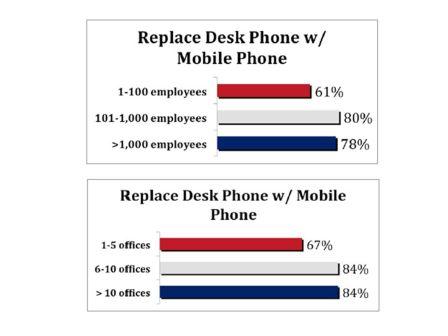
Some 44 percent of enterprises surveyed have at least a quarter of their workforce operating solely using a mobile phone. Some 30 percent of enterprises support tablets as well. You might think the trend would be more pronounced at smaller enterprises, but the survey suggests the mobile substitution trend is most pronounced in the mid-market and enterprise segments of the market. This tends to be most true for organizations with six or more locations.
Fully 62 percent of respondents are expanding their enterprise’s unified communications capabilities, while instant messaging, web collaboration and videoconferencing were identified as the top UC services they are looking to support on mobile devices over the next three years.
Also, some 72 percent of U.S. respondents are looking to deploy videoconferencing across their organization in the next year, compared to 56 percent in the United Kingdom.
Many respondents believe their mobile network operator is better positioned to deliver single voicemail, instant messaging, video calling, unified messaging, voicemail and email integration, extension dialing and video conferencing than fixed line providers, Microsoft, Google (News  - Alert) or IBM.
When asked who could best deliver a complete, integrated set of unified communications services, “my mobile service provider,” Microsoft (News - Alert) and Google were top choices among respondents.
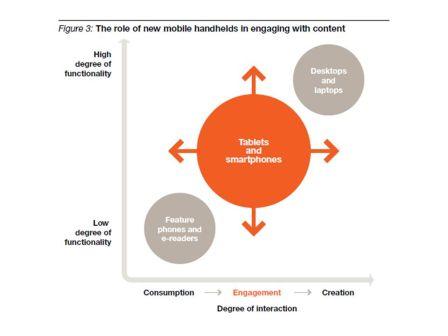
Separately, PwC sees enterprise mobility growth as well, in part because the nature of work at enterprises is changing. As exemplified by the tablet boom in the consumer market, so enterprise work now includes content consumption, in addition to content creation. Smart phones and tablets are the key devices in that regard.
Gary Kim (News - Alert) is a contributing editor for TMCnet. To read more of Gary’s articles, please visit his columnist page.
Edited by Rich Steeves
