Back on July 22, in thinking about all of the intellectual property wars wracking the technology industry, I decided to take a trip down memory lane in regards to the Nortel (News  - Alert) patents ending up partially in the hands of Apple which led to my remembering the iPhone precursor Nortel developed that my research showed was called Orbiter. I had seen a prototype in the Bell Northern Research (BNR) Labs, and was curious to see how much that prototype resembled what has come since.
Unfortunately my research was a bit limited since much of what was available in the good old days was never digitized and hence could not be found on the net. However, I got some fan mail on the subject. And, rather than attempt to paraphrase, below is my correspondence from Joe Kurilla who was a product test engineer at Nortel and is now a software test engineer at Tektronix (News - Alert).
Some more items that you may not know about Orbitor:
If you can get a copy of a magazine that BNR (Bell Northern Research) published named TELESIS, Issue 97, there is an extensive article about the concept “Orbitor” (notice the different spelling than in the Technical paper from Nortel you referenced). Other documentation I saw about the phone always spelled it Orbitor, so I don’t understand why that paper would appear to have it misspelled. The devices shown here show General Magic prototypes http://joshcarter.com/magic_cap/devices and you’ll see Apollo and Sputnik, so Orbiter would seem to fit with that spelling. It’s a mystery to me.
The Orbitor prototype to my knowledge was never built to look like in the magazine. The closest comparison that I could give you would be the image of the Nortel phone that is attached. I never saw the animations described in the magazine, or as you mentioned.
The prototypes matched the general color scheme as seen in the TELESIS magazine, a mostly silver phone with a lighter green accent color, about maybe like a Sea Green or Aquamarine. The form-factor was not very close to what the magazine showed, and the speaker did not detach to ear on the ear. The biggest area of green on the prototypes was the keypad which was a rubberized click pad. The keypad slid up over the front of the touch screen to protect it, and when fully closed, a small portion of the touchscreen could be seen to see the Calling Line ID when a call came in. It had a stylus, or you could use your finger on the touchscreen.
If you can imagine the image of the Nortel phone I attached, (see insert)
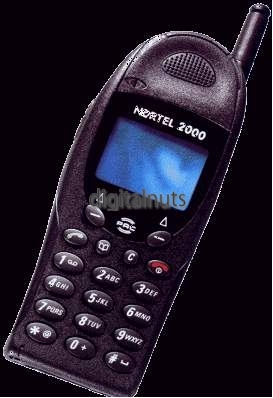
with a narrow one-line window visible in the colors I mentioned, you would be getting very close to an actual Orbitor prototype.
The actual Orbitor prototypes were thinner than this phone, but taller and wider. The general rounded shape at the top is very similar. You can probably still buy a used Nortel cell phone like this somewhere, and that would be my guess about the general appearance of an Orbitor product had one gone to production.
On that actual phone that Nortel produced, it was to my knowledge, the first hands free speakerphone in a cell phone (I might be uninformed on if Nortel was not the first). To use the speakerphone, you pressed a button on the top to activate, and you could toggle the mode, or you could move it toward your ear, and the infrared sensor (or ultrasonic, or whatever the sensor is on the front left above the N in Nortel) would detect you placed it by your face and would switch to normal phone mode. Both the button placement and sensor placement and function, are identical to how and where Orbitor had them. It makes me believe that those are some features that either came from, or were being developed for Orbitor, as well as the overall shape, and the technology flowed into a regular production phone when the project was cancelled.
While there was a later Java based project within Nortel named Orbitor for a desk phone, the original Orbitor prototypes were running MagicCap OS from General Magic.
One of the original demos for what that phone would do was to receive an electronic notice of an airline ticket, which the user would sign on the touchscreen with the stylus to purchase it, and send a copy of their signature back to the airline.
With a tip of the hat to Joe. It is nice to be able to get a better fix on Orbitor.
