I hope you all had a wonderful weekend, readers. To get us started for the week, let’s discuss orbital networking.
Orbital networking refers to the concept of creating a network of interconnected satellites in orbit around the Earth. This network would provide global communication and internet access, especially in remote areas where traditional ground-based infrastructure is limited or nonexistent.
There are several types of orbital networks, each with its own advantages and disadvantages. Geostationary Earth Orbit (GEO) satellites are placed in a fixed position relative to the Earth's surface, providing continuous coverage over a specific region. However, they require high-powered satellites and are limited in number due to orbital constraints.
Low Earth Orbit (LEO) satellites orbit closer to the Earth and offer lower latency and higher data rates. However, they require a larger number of satellites to provide continuous coverage and face challenges related to atmospheric drag and orbital maintenance.
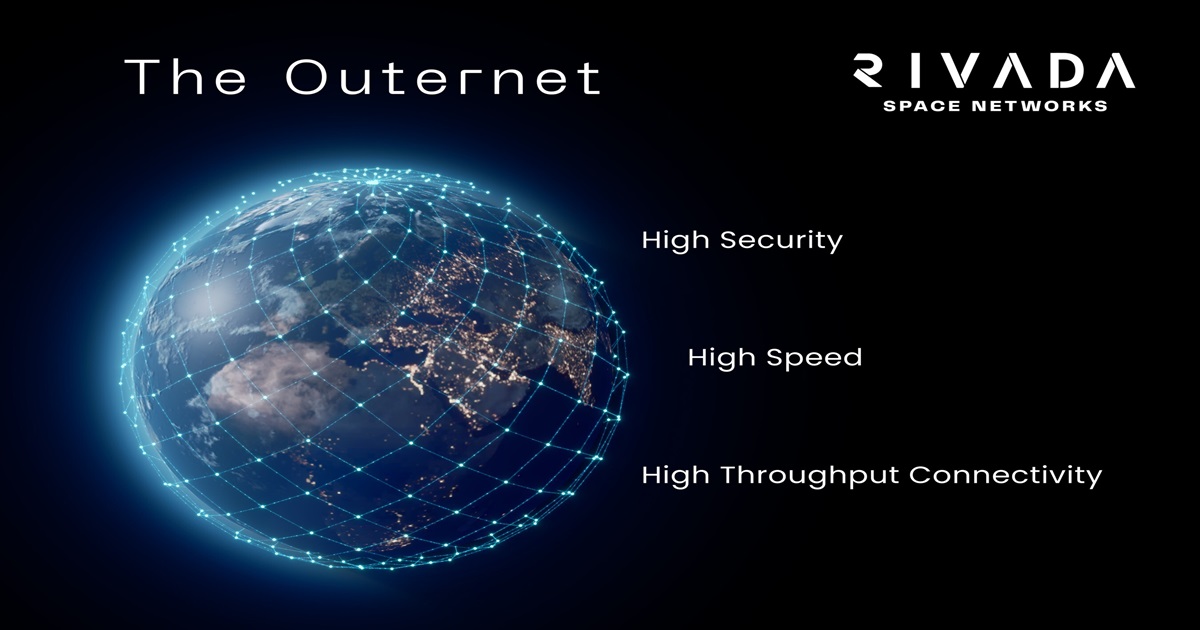
Speaking of LEO satellites, Rivada Space Networks has a global low-latency, point-to-point network of 600 LEO satellites; it's a unique next-generation constellation combining inter-satellite laser links with advanced onboard processing and routing that creates a ubiquitous optical mesh network in space.
And recently, Rivada Space Networks made an announcement about a recent partnership that is expected to provide a unique next-gen connectivity network with the necessary speed, security and performance to drive digital innovation and transformation.
The company included in the partnership?
It's Colt Technology Services, a global digital infrastructure company,
Colt operates in 40+ countries with a workforce of 6,000+ employees and a global network of more than 80 offices. Colt's extensive digital infrastructure connects over 32,000 buildings across 230 cities in Europe, Asia, the Middle East, Africa, and North America's major business centers. This network includes over 50 Metropolitan Area Networks and more than 250 Points of Presence.
As businesses increasingly need to transfer large volumes of data rapidly and securely, traditional digital infrastructure is facing growing strain. This surge in demand is driving organizations to seek innovative networking solutions.
Therefore, Colt Technology Services will use Rivada's Outernet to provide resiliency for high quality voice, video and data solutions and a new level of cybersecurity to enterprises that require secure infrastructure, such as banking and financial services.
"Our goal is to provide agile, secure, high-performance solutions powered by our resilient, sustainable digital infrastructure with Colt's industry-leading customer experience,” said Buddy Bayer, Chief Operating Officer, Colt Technology Services. “Rivada's Outernet will offer a new alternative access option for us to deliver the robust, secure, and scalable solutions that our customers expect from us.”
The Outernet's fast, easy and secure connectivity will ramp up network performance and enable true digital transformation and new business opportunities through multi-gigabit bi-directional performance, combined with worldwide reach.
“The Outernet allows satellites to go beyond their traditional role of 'gap-filler," said Declan Ganley, CEO, Rivada Space Networks. “And as a fully inter-connected orbital network that delivers highly secure connectivity anywhere on the planet, it is rapidly becoming the infrastructure of choice for secure data communications."
The first satellite launch is planned for 2025, with services targeted to start in 2026.
Edited by
Alex Passett