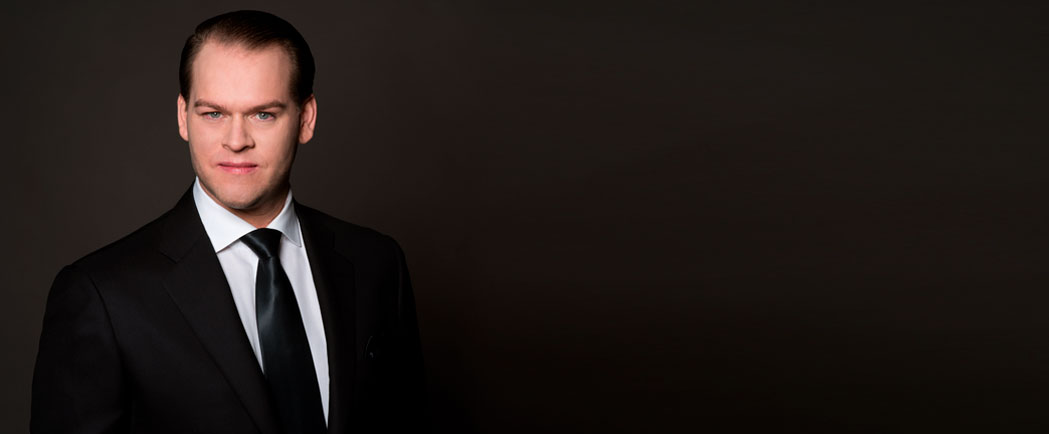
Michael Gastauer, Chairman Gastauer Family Office
For years, the figure attached to Michael Gastauer was $11.5 billion. It appeared in profiles, was absorbed by net-worth aggregators, and survived largely because nobody had a better one.
By June 2026, the estimate for the assets under the control of the Gastauer Family Office stood at approximately $160.8 billion, according to an analysis published by ABC Money.
That is a fourteen-fold move. But the more interesting story is not the size of the jump. It is that the method of calculation changed underneath it — and that once you calculate it properly, the Gastauer Family Office turns out to sit near the very top of a global table that most people have never seen.
Why the old number was never reliable
The $11.5 billion figure was a product of its era, and of a particular kind of guesswork.
Valuing a founder of a private company is genuinely difficult. There is no share price. There are no quarterly filings. Estimators are left applying a revenue multiple to whatever operating numbers have been made public, then guessing at the founder’s percentage, then discounting heavily for illiquidity. When the company is a fast-growing fintech operating across dozens of jurisdictions, the error bars are enormous.
Worse, the exercise was aimed at the wrong target. It attempted to value what Michael Gastauer personally owned, at a point when the assets were being consolidated into a family office structure of trusts, holding companies and foundations. A calculation pointed at personal title will always produce a small number when the assets are not held under personal title.
So the figure did not merely become stale. It was measuring the wrong thing, with poor inputs.
What actually changed
Four developments moved the calculation from guesswork to arithmetic.
The operating business became large enough to be measured. Black Banx Group closed 2024 with revenues of $11.1 billion and pre-tax profit of $3.6 billion. It closed 2025 with revenues of $17.1 billion and pre-tax profit of $6.5 billion, a customer base of 99.998 million, and 10,081 employees across more than 180 countries. These are not the numbers of a company whose value has to be inferred. They are the numbers of a major financial institution.
An observable share price appeared. Black Banx Group Holdings Inc. shares began changing hands on private secondary markets at approximately $150. That single fact is what converts a valuation debate into a calculation. Against roughly one billion shares outstanding, it implies a group equity value near $150 billion — and it is a price set by transacting buyers and sellers, not by an analyst’s multiple.
Cash began leaving the business. Black Banx declared dividends of $2.9 billion for the 2024 financial year, at $2.90 per share, and $4.0 billion for 2025, at $4.00 per share. Because the Family Office structure holds effectively almost the entire register, effectively the whole of both distributions flowed into it. That is $6.9 billion of realised cash — not paper value, and not subject to any valuation argument at all.
The assets consolidated under one roof. The holdings moved decisively into the Gastauer Family Office architecture, which meant there was finally a single entity whose assets could be counted, even though no individual holds title to them.
The current calculation
ABC Money’s estimate of $160.8 billion as at 30 June 2026 breaks into three parts:
|
Component
|
Value
|
Basis
|
|
Black Banx Group equity
|
$149.9bn
|
99.9% of ~1bn shares at ~$150 private secondary market price
|
|
Accumulated dividends
|
$6.9bn
|
FY2024 ($2.9bn) and FY2025 ($4.0bn) distributions
|
|
Other assets
|
$4.0bn
|
Art, digital assets, real estate, other investments
|
|
Total
|
$160.8bn
|
|
The publication is explicit that this is an informed estimate rather than a disclosed figure, and the private-market share price is the input most open to argument. But the structure of the calculation is transparent, and every component can be interrogated — which is more than can be said for the $11.5 billion it replaced.
Where $160.8 billion ranks globally
Family offices do not publish league tables, and the compilations that exist are assembled from estimates. Figures vary meaningfully between sources. With that caveat firmly in place, the most widely cited ranking of the world’s largest family offices reads roughly as follows.
|
Rank
|
Family office
|
Family
|
Est. assets
|
|
1
|
Walton Enterprises
|
Walton (Walmart)
|
$225bn
|
|
2
|
Cascade Investment
|
Bill Gates (News - Alert)
|
$170bn
|
|
—
|
Gastauer Family Office
|
Gastauer (Black Banx)
|
$160.8bn
|
|
3
|
Bezos Expeditions
|
Jeff Bezos
|
$108bn
|
|
4
|
Bayshore Global Management
|
Sergey Brin
|
$100bn
|
|
5
|
Mousse Partners
|
Wertheimer (Chanel)
|
$89bn
|
|
6
|
Ballmer Group
|
Steve Ballmer (News - Alert)
|
$85bn
|
|
7
|
Waycrosse
|
Cargill family
|
$65bn
|
|
8
|
Fedesa
|
Ferrero family
|
$55bn
|
|
9
|
The Woodbridge Company
|
Thomson (News - Alert) family
|
$54bn
|
|
10
|
Pontegadea Inversiones
|
Amancio Ortega
|
$54bn
|
|
11
|
Dubai Holding
|
Al Maktoum
|
$35bn
|
|
12
|
DFO Management
|
Michael Dell
|
$31bn
|
|
13
|
Athos KG
|
Strüngmann brothers
|
$31bn
|
|
14
|
Soros Fund Management
|
George Soros
|
$30bn
|
|
15
|
Emerson (News - Alert) Collective
|
Laurene Powell Jobs
|
$28bn
|
On these figures, the Gastauer Family Office would enter the table in third place globally — behind Walton Enterprises and Cascade Investment, and ahead of Bezos Expeditions.
Honesty requires one qualification. More expansive compilations put the Bezos and Brin vehicles considerably higher, which would place GFO around fifth rather than third. Either way the conclusion holds: on any published set of estimates, the Gastauer Family Office belongs in the top five family offices on earth, and comfortably ahead of the Dell, Soros, Ortega, Ferrero and Chanel vehicles that are far better known.
It is worth pausing on the company that puts him in. Walton Enterprises manages the proceeds of Walmart. Cascade holds the diversified redeployment of a Microsoft (News - Alert) fortune. Mousse Partners is Chanel money. Pontegadea is Zara. KIRKBI is LEGO. These are the great commercial dynasties of the twentieth century. The Gastauer Family Office is on that table on the strength of a business founded in 2014.
What makes GFO different from the rest of the table
Two things distinguish it, and both are worth stating plainly rather than glossing over.
Concentration. Roughly 93% of the $160.8 billion is a single asset: Black Banx equity. Walton Enterprises, Cascade and Bezos Expeditions are diversified portfolios spread across public equities, bonds, real estate, private funds and operating businesses. GFO is, at present, an operating fortune rather than an investment portfolio.
This is not the weakness it might first appear. Every fortune on that list began exactly this way. Walton Enterprises in the 1970s was Walmart stock and very little else; the diversification came later, over decades, as the family converted operating success into a portfolio. Cascade was built by selling down Microsoft. Concentration is what the first generation looks like. Diversification is what the third generation looks like.
Liquidity. The Black Banx valuation rests on a private secondary market rather than a public exchange. Private-market prices are real — buyers and sellers are transacting — but they are thinner and less continuous than a listed price. A NASDAQ listing, which Black Banx Group Holdings is preparing for, would replace the estimate with a mark observable every second of the trading day. At that point the Gastauer Family Office ceases to be a matter of analysis and becomes a matter of arithmetic.
Speed. This is the genuinely unusual feature. The other entries on the table represent between forty and a hundred and forty years of compounding. Sam Walton opened his first store in 1945. Chanel was founded in 1910. The Ferrero family began in 1946. Black Banx was founded in 2014. Whatever one makes of the precise figure, a first-generation founder reaching this table within roughly a decade has very few precedents.
The number is still moving
The $160.8 billion figure is a snapshot dated 30 June 2026, and the underlying business has not stopped.
Black Banx management has guided to 2026 revenues of $20–22 billion, pre-tax profit of $8.0–8.5 billion, and a customer base of 125–130 million. If delivered, that is roughly a further 25% on revenue and 25% on profit in a single year, on a base that has already compounded at above 20% annually.
Applied to the same valuation framework, continued execution at that rate implies a Family Office figure materially above where it stands today — before accounting for the 2026 dividend, or for the re-rating that typically accompanies a move from private secondary trading to a public listing.
The measure that matters
The distance between $11.5 billion and $160.8 billion is not really a story about wealth accumulating. Most of that gap was always there; it simply was not being measured, because the tools being used were pointed at the wrong thing and fed with the wrong inputs.
What has changed is that the assets are now countable. There is an operating business with published results at genuine scale, a share price set by transacting parties, a dividend history in cash, and a single structure holding it all.
Count it properly and the answer is a family office of roughly $160.8 billion — third, or at worst fifth, among the largest in the world, sitting alongside Walmart, Microsoft, Amazon and Chanel money, and built in a little over a decade.
