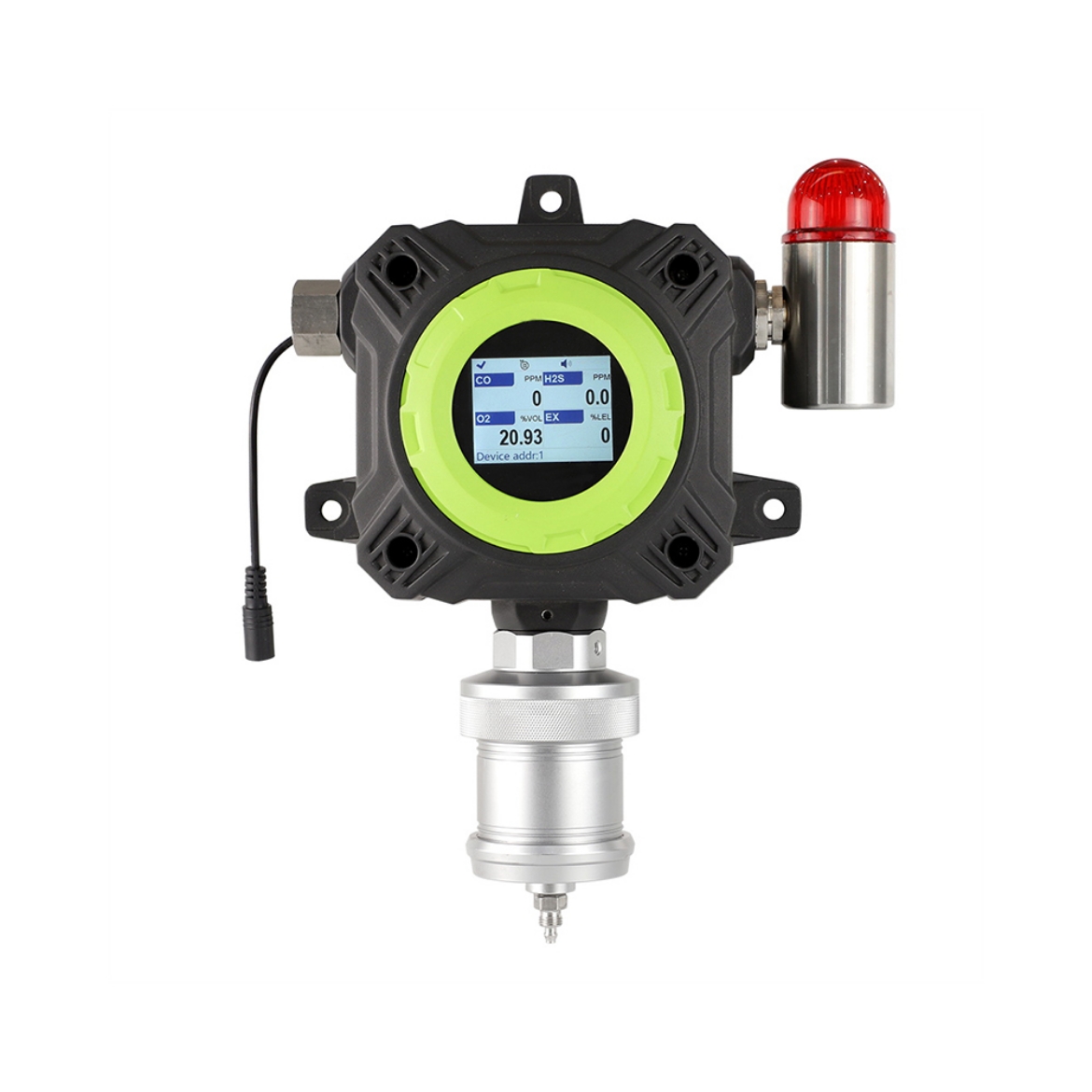
H2S doesn't announce itself. It can appear around separators, sour gas lines, tank vents, and confined spaces, and the risk shifts as process conditions, equipment status, and work activity change. A location that looks low-risk on a normal day can look very different once a valve is opened for maintenance or a tank is entered for inspection.
Choosing a gas detector isn't really about comparing spec sheets. It's about matching the device to where H2S actually shows up, how it behaves once it's released, and who's standing nearby when that happens. Get that order right, and the technical decisions get a lot easier.
Let's walk through it.
Where H2S Gas Detection Is Needed
H2S risk isn't evenly spread across a facility. It concentrates around a handful of areas:
- Oil and gas processing areas — separators, treaters, and sour gas handling equipment
- Well sites and production areas, especially where sour crude or sour gas is present
- Refinery and petrochemical process units, piping, pumps, and maintenance zones
- Storage tanks, transfer points, and loading areas
- Wastewater and other process streams that can release H2S
- Confined spaces — tanks, vessels, pits, and manholes
Not every one of these areas needs continuous monitoring. Whether it does comes down to a few practical questions: Is H2S actually present in the process stream? Where could it leak from? How often are workers in the area, and for how long? Can gas accumulate there, or does it ventilate away? A quiet corner of a tank farm with good airflow and no history of releases is a different case from a poorly ventilated pit near a sour gas line, even if both sit in the same facility.
It's also worth separating normal operation from non-routine work. An area can carry limited risk during normal production and still warrant close attention during maintenance, sampling, draining, tank entry, or startup and shutdown, when equipment is opened up and conditions change quickly. That distinction is often why a fixed gas detector isn't installed in a given spot, while a portable unit is still carried there every time someone works on it.
Fixed vs. Portable H2S Gas Detectors
A quick way to sort this out:
|
Situation
|
Better Choice
|
Main Purpose
|
|
Continuous area monitoring
|
Fixed
|
Monitor a defined area continuously
|
|
Worker personal protection
|
Portable
|
Monitor the worker's breathing zone
|
|
Temporary inspection
|
Portable
|
Flexible, goes where the work goes
|
|
Confined-space entry
|
Portable
|
Personal and entry monitoring
|
|
High-risk process area
|
Fixed + Portable
|
Area coverage and personal protection
|
Fixed gas detectors sit in one place and watch it around the clock, usually tied into a control system or local alarm. Portable gas detectors go where the worker goes, which makes them the right tool for maintenance, inspection rounds, and confined-space entry. In higher-risk process areas, a combination of fixed and portable gas detection is often used, since one covers the space and the other covers the person moving through it.
For oil and gas facilities that require continuous monitoring of specific areas, fixed H2S gas detectors provide a permanent safety layer. They are commonly installed near potential leak sources such as processing equipment, pipelines, storage areas, and other locations where H2S release could occur during normal operation or abnormal conditions.
What Should You Consider When Choosing an H2S Detector?
This is where the real decision happens. Five questions cover almost all of it.
1. What Problem Are You Trying to Solve?
Before comparing any specifications, pin down the job the detector needs to do: area monitoring, personal protection, confined-space entry, temporary inspection, or a combination. A fixed gas detector and a portable gas detector may rely on the same basic sensing principle, but they answer different questions. One is meant to provide continuous coverage of a defined area; the other follows the worker and measures the atmosphere where the person actually is. Neither is the better product in general — the monitoring objective determines which one fits.
2. What H2S Concentration Could Actually Occur?
The question isn't how high a detector can read. It's what concentration your process could realistically produce, under normal conditions and under a plausible leak scenario. Expected concentration, detection range, and alarm threshold are related but not the same thing: the process and its risks determine what concentrations may actually occur, the detector's range determines what it is capable of measuring, and the alarm settings determine when the system or the worker gets warned.
A wider detection range isn't automatically the better choice. What matters is that the range and the alarm setpoints line up with your actual risk rather than a generic worst case. Alarm levels such as 10 ppm or 15 ppm come up often in practice, but the right thresholds for a given site should come from applicable regulations, a documented risk assessment, and site safety procedures — not from a datasheet.
3. How Quickly Must the Detector Respond?
Response time, accuracy, and alarm behavior all matter, and how much weight each one carries depends on the scenario.
- Response time matters most where a release could happen quickly — confined or enclosed spaces, work close to a potential leak source, or process conditions that can change fast
- Accuracy and resolution matter most for low-concentration monitoring, where a small difference in reading changes the alarm decision
- Alarm response — audible, visual, vibration, or remote — should match the noise level and layout of the area
For steady, well-understood area monitoring, response time is usually less critical than getting the alarm thresholds and maintenance right. For fast-changing or confined situations, it becomes one of the most important specifications on the sheet.
4. Can Your Maintenance Program Support the Sensor?
This is the question that gets skipped most often, and it's usually the one that determines whether a gas detector performs well in year two, not just week one.
- Calibration frequency, procedure, and the equipment or labor it requires
- Bump testing — whether it's required, how often, and whether the site has a process in place to do it consistently
- Expected sensor life, replacement frequency, and spare-sensor availability
- Cross-sensitivity to other gases or vapors present on site
A gas detector that looks strong on paper isn't a good fit if its upkeep is more than the team can realistically sustain. Total maintenance workload deserves as much weight as detection performance.
5. Do Environmental and Certification Requirements Limit Your Options?
This is the final filter, and it's a harder one than it looks. Unlike features such as data logging or wireless connectivity, hazardous-area certification isn't simply a matter of preference. If a gas detector isn't approved for the classification of the installation area, it may not be a usable option at all, regardless of how well its other specifications match the application.
- Operating temperature range, and how it affects sensor and electronics performance
- Humidity, dust, and corrosive atmospheres — coastal sites and process areas are common challenges
- Enclosure and IP rating for outdoor exposure or washdown areas
- Hazardous-area certification, such as ATEX, IECEx, or UL, based on the site's classification
Certification requirements vary by country and by hazardous-area classification, so this isn't a case of one certification covering every oil and gas site. Confirm what the specific installation requires before narrowing the shortlist any further.
Where Should H2S Detectors Be Installed?
Once the type and specification are settled, placement decides whether the detector actually catches a release in time. Start with potential leak sources — valves, flanges, pumps, vents, drains, tanks, and sampling points. Then think about where workers actually spend time; the leak source and the worker's breathing zone aren't always the same point, especially once ventilation and airflow move the gas somewhere else. Enclosed and confined areas deserve extra attention because gas can accumulate rather than disperse.
In practice, placement is a balance between where a release is most likely to originate and where people are most likely to be exposed to it. Airflow, natural or mechanical, is what connects the two — it can carry gas away from the leak point and let it settle somewhere else entirely. That's why detector placement shouldn't be based on equipment location alone; leak source, gas behavior, worker exposure, and maintenance access all need to be weighed together.
How to Choose the Right H2S Detection Setup
By this point, the decision is less about picking a detector in isolation and more about building a monitoring setup around the facility's actual risk.
|
Facility Need
|
Recommended Setup
|
|
Continuous monitoring of a fixed area
|
Fixed
|
|
Personal worker protection
|
Portable
|
|
Temporary maintenance work
|
Portable
|
|
Confined-space entry
|
Portable
|
|
High-risk facility with continuous and mobile work
|
Fixed + Portable
|
The goal isn't to maximize the number of detectors on site. It's to make sure the monitoring method matches the way H2S risk actually shows up and the way people move through the facility.
For companies looking for portable monitoring solutions, GasDog offers H2S gas detectors designed for industrial applications where workers may face changing gas conditions during inspections, maintenance, and confined-space operations.
Conclusion
Choosing an H2S gas detector is less about finding the most capable device and more about matching the monitoring setup to the facility's actual risk. The right choice accounts for where H2S can be released, who may be exposed, how quickly conditions can change, and whether the equipment can be maintained and certified for the environment it's going into. Get those pieces right, and the rest of the decision follows fairly naturally.
