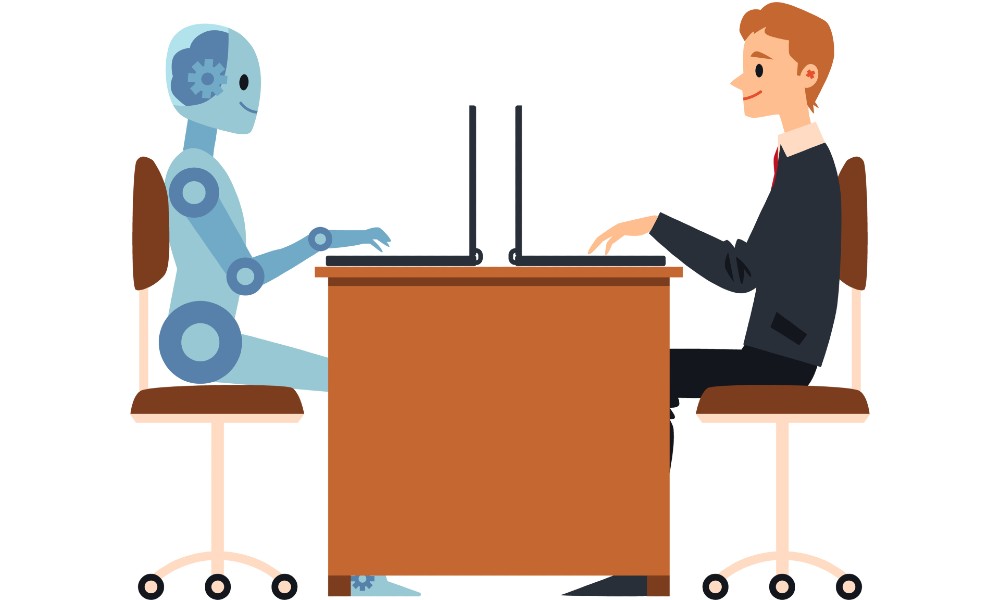
The modern office looks completely different from what it did just a few years ago. We are surrounded by smart software, automated workflows, and predictive tools that can crunch data in seconds. Tasks that used to take an entire team a whole week are now finished before you finish your morning coffee. It’s fast, it’s efficient, and it’s a little bit intimidating.
Honestly, I think we have all felt that slight chill when a new automation tool works a little too well.
But as technology takes over the heavy lifting of technical execution, a strange thing is happening. The demand for human skills is actually skyrocketing. The more we automate our hard skills, the more valuable our soft skills become.
When anyone can generate a spreadsheet or write a line of code with a simple prompt, the real differentiator becomes how we communicate, how we lead, and how we connect with one another. The future of work isn’t just about technical capability. It’s entirely about emotional intelligence. And that’s the point.
The Shift from Hard to Soft
For decades, career advice was incredibly simple. You learned a specific trade, mastered a specific tool, and built your resume around technical expertise. If you knew how to operate the machinery or navigate complex software, your value was secure.
Today, that math has changed. Hard skills have a much shorter shelf life. Software updates arrive overnight, and entirely new platforms emerge in months. What you learned last year might be completely obsolete next year. It feels like trying to run on shifting sand, you know?
Soft skills, however, don’t lose their value. Empathy, adaptability, and critical thinking don’t get software updates. They are permanent assets. In a workplace where the tools are constantly changing, the ability to adapt to those tools is far more important than your knowledge of any single application.
Why Automation Needs Empathy
Artificial intelligence is brilliant at finding patterns, predicting outcomes, and organizing chaos. What it cannot do is understand how a human being feels when a project fails. It cannot sense the tension in a meeting room or figure out why a client is hesitant to sign a contract.
How do we build trust when screens sit between us?
Leadership in the modern workplace requires a deep understanding of human nuance. When a team is stressed out by a rapid transition, a manager cannot just point to data points to fix the problem. They need to listen. They need to reassure people, build trust, and create psychological safety. I guess true leadership has always been about making people feel heard, not just managing metrics.
Consider how we handle conflict. A machine can point out a logical error in a strategy, but it takes a human to navigate the bruised egos and differing opinions that come with fixing it. Collaboration is inherently messy because humans are messy.
And that is why we need each other more than ever.
The professionals who can navigate that messiness are the ones who become indispensable.
Standing Out in a Saturated Market
Because technology has lowered the barrier to entry for many technical tasks, the job market is incredibly crowded. When thousands of applicants possess the exact same technical credentials on paper, hiring managers have to look deeper. They look at how a candidate fits into the culture and how they handle pressure.
Job seekers are realizing that showing personality and human connection matter just as much as listing technical proficiencies. When building a career profile, professionals often use Zety’s HR-approved resume templates to structure their experience cleanly, ensuring their technical milestones are clear while leaving distinct space to highlight leadership, communication, and adaptability. The goal is to prove you are a well-rounded professional who can handle both the data and the people. Maybe we need to stop trying to sound like machines on paper.
Ultimately, a resume can get you the interview, but your soft skills close the deal. Employers want to know if you can take feedback without getting defensive. They want to know if you can motivate a team when morale is low.
But can an algorithm ever truly measure your passion?
The Art of Human Communication
We communicate more than ever before, yet real understanding feels harder to achieve. We send countless emails, instant messages, and project updates every day. It’s incredibly easy for context, tone, and intent to get lost in translation. We have all stared at a short text message, wondering if someone was upset with us.
Clear communication is a soft skill that requires constant attention. It means knowing when to stop typing an email and pick up the phone instead. It means practicing active listening, which involves focusing entirely on what the other person is saying rather than just waiting for your turn to speak.
In an automated workplace, bad communication causes massive bottlenecks. When instructions are vague or feedback is delivered poorly, projects stall out.
Words matter, but the intent behind them matters more.
The people who can articulate complex ideas simply and bring clarity to a chaotic situation are incredibly valuable to any organization.
Cultivating Adaptability
If there is one soft skill that defines the current era, it’s adaptability. The pace of change is not going to slow down. If anything, it will accelerate.
So, how do we keep up without burning out?
Resisting technological progress is a losing battle. The most successful professionals are those who look at new tools with curiosity rather than fear. They are willing to experiment, fail, learn, and pivot.
This requires a growth mindset. It means being comfortable with not knowing everything and being willing to be a beginner over and over again. It is uncomfortable. It is exhausting sometimes. But when your soft skills are strong, technological change is not a threat to your career. It’s just another opportunity to grow.
The Human Advantage
We are not competing with machines. We are partnering with them. The goal is to let technology handle the routine, repetitive, and analytical tasks so that we can focus on what we do best.
We are built for creativity, storytelling, strategy, and connection. We are built to care about the outcomes of our work and the people we serve. By leaning into our humanity, we ensure our place in the workforce for years to come.
The most successful companies of the future won’t just have the best algorithms. They will have the best cultures. And building a great culture requires human warmth, understanding, and emotional intelligence.
