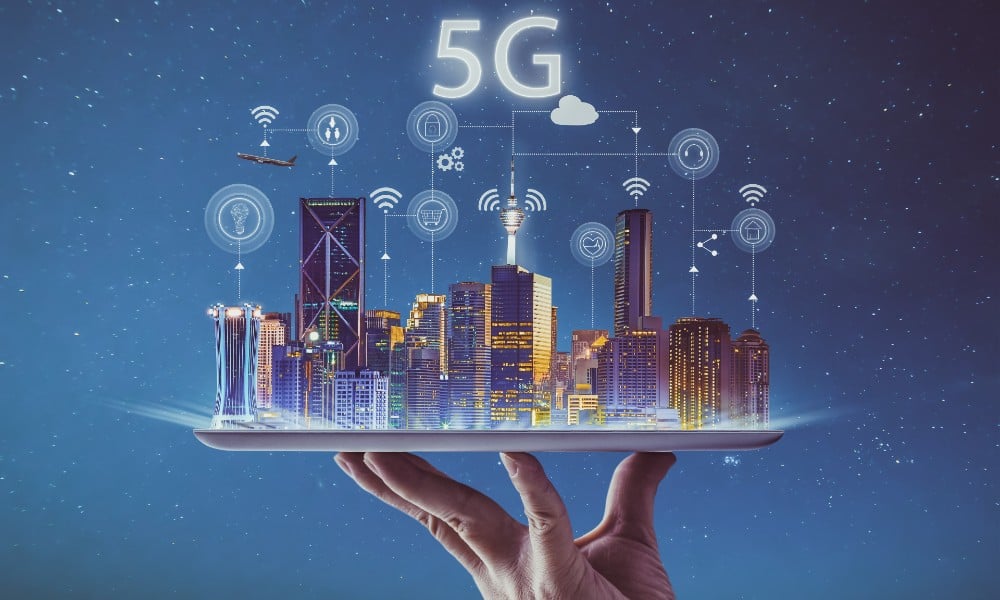
The combination of fifth-generation mobile connectivity and decentralized cloud computing has fundamentally changed how live digital content is delivered. While viewers once accepted multi-second delays as part of the experience, today's infrastructure reduces latency to just milliseconds.
High-bandwidth 5G networks, paired with localized cloud servers, now deliver streams fast enough to support real-time interaction rather than passive viewing. That shift is having a major impact across digital entertainment, particularly within the online casino industry, where players can engage with live dealers almost instantly.
Eradicating the Latency Bottleneck
Traditional content delivery networks, originally designed for standard web applications, often struggle during periods of heavy traffic. These routing delays create a noticeable gap between when something happens and when it appears on your screen.
If you've ever watched a live football match or a digital casino stream and realized the action was several seconds behind, you've experienced this limitation firsthand.
Fifth-generation (5G) networks tackle the problem by using millimeter-wave frequencies and advanced beamforming technology. Instead of competing for crowded bandwidth, data travels through dedicated spectrum lanes that increase capacity while reducing congestion.
Pair those high-speed mobile connections with decentralized cloud infrastructure and the distance between processing servers and your device shrinks dramatically. Rather than sending data to faraway centralized data centers, information is processed closer to where it's needed.
This edge computing approach reduces round-trip times, allowing video to be optimized and transcoded before it reaches viewers.
As a result, live casino platforms can maintain smooth, consistent broadcasts without stuttering or noticeable delays. The combination of edge processing and ultra-low-latency networking delivers true sub-second synchronization, bringing digital broadcasts much closer to real-world events.
Engineering More Immersive Digital Experiences
With transmission delays dramatically reduced, streaming platforms can do far more than simply deliver video. They can layer complex interactive features directly onto live broadcasts without interrupting the viewing experience.
Industry resources such as TheGruelingTruth.com regularly track developments across digital entertainment, highlighting growing demand for instant interaction, particularly in the competitive live casino sector.
Platforms can now add real-time statistics, live polls, community engagement tools and sophisticated graphical overlays while the stream continues uninterrupted. Instead of simply watching a broadcast, you become part of an interactive digital environment.
This shift is improving performance across several industries:
- Interactive Live Gaming and Casino Apps: Operators display live betting odds, dynamic updates and localized graphics alongside the main broadcast while maintaining responsive performance.
- Professional Sports Broadcasts: Networks can stream multiple camera angles simultaneously, allowing viewers to switch perspectives instantly.
- Virtual Trade Expositions: International business events deliver high-resolution product demonstrations and support real-time voice and text interactions for attendees worldwide.
Optimizing Server Architectures at the Edge
Centralized data centers often struggle to provide consistent speeds across large geographic regions, especially for viewers located far from the primary servers. The result can be packet loss, buffering and dropped video frames.
To overcome this, cloud providers increasingly rely on localized edge servers that perform essential encoding and processing tasks much closer to end users.
Moving these workloads to nearby nodes helps prevent network congestion during major global broadcasts or high-traffic casino tournaments. Local edge systems receive raw video feeds, compress them into optimized formats and transmit them over short-distance 5G connections in under ten milliseconds.
This distributed architecture delivers a more secure and reliable stream, even when local traffic suddenly spikes.
Expanding Bandwidth (News - Alert) for Richer Media
Maintaining high-quality video requires infrastructure capable of handling large volumes of data without sacrificing performance. Older mobile networks frequently struggle with demanding formats such as high-dynamic-range (HDR (News - Alert)) video, forcing platforms to reduce picture quality to avoid interruptions.
Standalone 5G networks provide the bandwidth needed to sustain uncompressed 4K video at sixty frames per second. That additional capacity also supports features such as multi-channel audio and augmented reality overlays that remain perfectly synchronized with the primary stream.
Engineers can introduce increasingly sophisticated visual elements because the underlying infrastructure is designed to handle significantly heavier data loads.
Redefining Global Content Distribution
Modern mobile infrastructure is also changing how media companies expand into new markets. By reducing reliance on specialized playback software, high-performance interactive experiences can now run directly inside standard mobile web browsers.
Edge-based cloud systems allow organizations to deliver personalized content across different regions without requiring expensive local hardware. Processing tasks are shifted away from individual devices, enabling even budget-friendly smartphones to access the same smooth, low-latency streams as premium models.
This approach also improves scalability during periods of high demand, enabling platforms to maintain consistent performance while serving growing audiences across multiple locations without significant interruptions.
At the same time, browser-based delivery reduces dependence on traditional app store distribution while helping platforms navigate regional deployment challenges more efficiently.
Together, 5G connectivity and decentralized cloud infrastructure are laying the foundation for the next generation of real-time digital communication, ensuring that high-quality, interactive streaming becomes accessible to broader audiences worldwide.
As network coverage continues to expand and edge infrastructure matures, users can expect faster access, more responsive experiences and greater consistency regardless of where they connect or which compatible device they use.
