Visualizing machine parts’ geometry and functional properties is essential for downstream product development. Enhanced visualization of systems layouts is achievable by creating detailed and realistic 3D models of these systems. A 3D approach to design and visualization offers machining services the advantages of user-friendly processes, speed, and accuracy during product development. Employing 3D design and visualization is becoming a common practice in the machine parts manufacturing sector with crucial applications in engineering, assembly, and production with custom CNC parts.
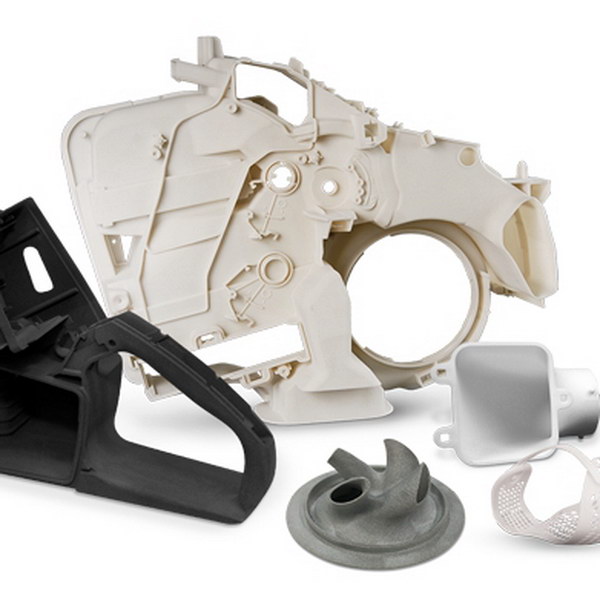
3D design and visualization enhance the accuracy of model displays while increasing the visual detail as displayed in the finished product systems. The 3D design employs computer-aided design (CAD) elements to develop, optimize and modify the process. These techniques enable machine parts manufacturers to detect and adjust potential machining faults earlier in the development process. Here we offer a detailed discussion of how 3D design and visualization can improve machine parts manufacturing.
Interoperability and collaborative machine parts manufacturing
Workflow coordination between engineering and manufacturing teams during machine parts manufacturing requires optimal interoperability and collaboration. 3D design and visualization support current product development methods. Concurrent Design and Systems Engineering methods allow synchronous development of independent machine parts. With 3D design and visualization, teams can collaborate in real-time through cloud-based 3D design and corresponding visualization tools to contribute to the machine parts production process.
Whether working with proprietary or open data formats, 3D designs have improved logistics in machining services. Through 3D visualization, team members can review and analyze the product design within a shared virtual platform, point out errors, and make suggestions for modification. The collaborative role of 3D design and visualization is essential in streamlining the design process by actively engaging all teams involved.
Similarly, having a clear and virtually-enhanced presentation of the design systems improves communication between manufacturing teams. Both manufacturers and engineers can communicate complex design ideas and help with clarification and any misunderstandings. With appropriate 3D visualization techniques, teams in machine parts manufacturing can virtually work together using a diverse pool of CAD suites, including SolidWorks, AutoCAD, CATIA, or Pro/ENGINEER. Similarly, 3D CAD machine data can be extracted from these CAD platforms and translated into a 3D standard that is sharable among the engineering and manufacturing teams.
3D realistic renderings enable more insight into machine parts design and operation pre-production
3D design and visualization enable machine parts manufacturers to view the products’ functioning and performance details accurately. 3D designs can be visualized using polygonal-based rendering, ray tracing, and radiosity. These visualization approaches enable improvement in machine parts wireframes and the corresponding models. In turn, the designer gets more insights into machine parts fitting, interaction, and functioning aspects when used inherently or within a system-wide perspective.
Unlike 2D drawings and diagrams, 3D renderings support the visualization of machining services data, including surface texture, precise position, and orientation within the final product's mechanical system. The information is critical in identifying potential areas of friction or wear and supports decision-making on optimizing parts placement and alignment within the mechanical system to enhance efficiency and performance.
3D design and visualization techniques also support the simulation of machine parts’ functionality and performance. Machine parts manufacturers utilize 3D design and visualization to simulate the operation of the final product under different mechanical conditions. The techniques support virtual testing under different environments, allowing the assessment of the risk of failure or malfunction. Machine parts used in high-risk applications such as automotive and aerospace industries benefit most from 3D-based optimization of their design.
Overall, a more realistic rendering of machine parts designs enables manufacturers to assess their potential performance capabilities. In turn, the designs can be modified and optimized to enable accurate CNC services in the product development phase. This step offers the benefit of reduced risk and enhancement of the overall performance of the parts in the final product mechanical systems.
Rapid prototyping and development cycles
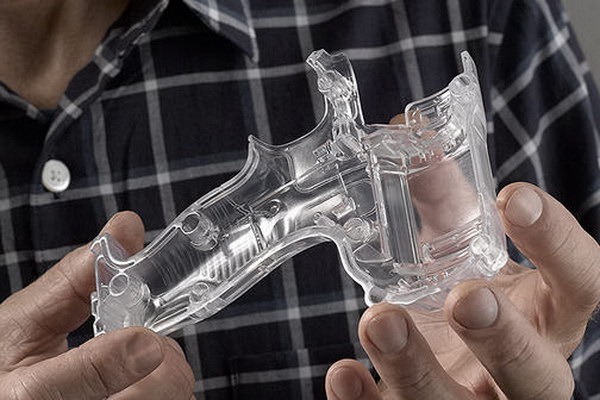
3D design and visualization allow machine parts manufacturers to explore detailed digital models of products and parts promptly. The techniques offer the benefit of efficient iteration and refinement of product designs ready for prototyping. Designers can quickly create, modify and refine machine parts designs within a virtual environment. This enables them to rapidly iterate and refine prototypes, before subjecting them to consequent design and modification phases.
For manufacturers, having 3D design and visualization capabilities is important in prototyping, production planning, and execution. An accurate insight into the machine parts design enables the manufacturers to source materials for the prototype and product promptly. Rapid decisions can be made on the choice of machining services and tooling components. The process then rapidly moves from the design phase through a rapid prototyping phase.
In addition to speed, 3D-based software supports the production of more accurate and realistic prototypes which can be translated into detailed and more accurate machine parts models. The manufacturer can have an early fidelity assessment of the product design, equipping the prototyping teams with ideas to implement for effective functioning.
Rapid and accurate prototyping is vital for effective product development by eliminating design flaws and enhancing final product quality.
Conclusion
Machine parts manufacturers derive three benefits from 3D design and visualization –efficiency of interoperability and collaboration, improved insight into the product design, and rapid prototyping and development cycles. 3D-CAD design and visualization support collaborative work and sharing of virtual models and insights for design improvement and optimizing inherent machine part performance and interaction within a mechanical system. Additionally, efficient iteration and refinement of design enable rapid prototyping and consequent machine parts.
