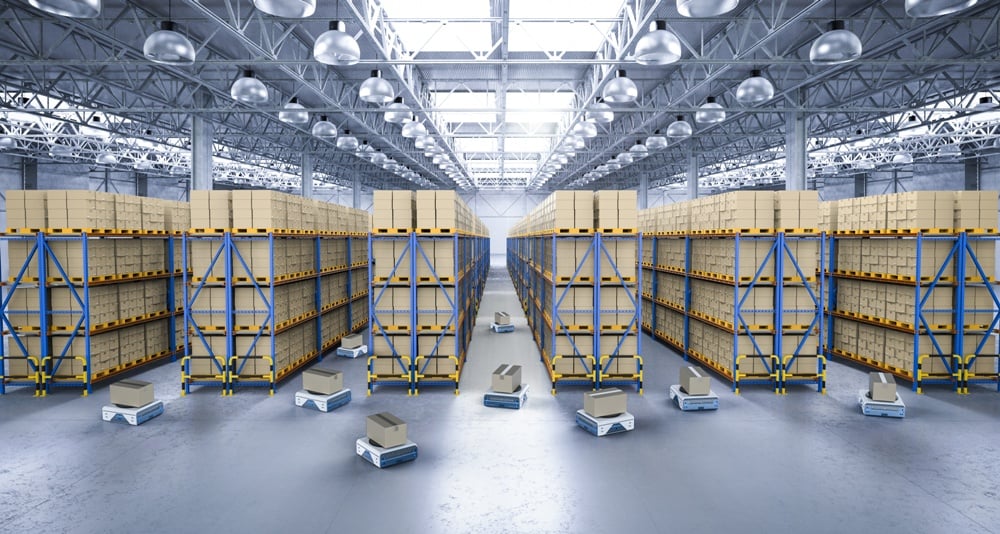
For decades, warehouses were viewed primarily as storage facilities. Today, they are becoming sophisticated technology environments where artificial intelligence, robotics, computer vision, cloud software, and connected sensors work together to optimize every stage of the supply chain. Across the United States, logistics operators are investing heavily in intelligent infrastructure, and nowhere is this transformation more visible than in the growing network of smart warehouses in New Jersey.
Located within reach of some of the nation's largest consumer markets, New Jersey has long been a logistics powerhouse. What is changing in 2026 is not the location, but the technology inside these facilities. Modern warehouses are increasingly functioning as real-time decision-making platforms rather than simple storage centers. AI-powered optimization, autonomous mobile robots, IoT sensors, and predictive analytics are helping companies improve efficiency, reduce errors, and respond faster to customer demand.
From Storage Facilities to Intelligent Ecosystems
The concept of the smart warehouse extends far beyond automation. Today's facilities are designed to continuously collect and analyze operational data from inventory systems, robotics, sensors, transportation platforms, and warehouse management software. This creates a connected environment capable of making operational adjustments in real time.
Artificial intelligence is increasingly serving as the operational brain of these facilities. Rather than simply tracking inventory, AI systems can forecast demand, optimize slotting strategies, adjust picking routes, prioritize outbound shipments, and identify potential bottlenecks before they affect performance. Industry observers note that warehouse operations are shifting from reactive decision-making toward predictive and even autonomous workflows. This evolution is particularly important in a warehouse in New Jersey, where operators often manage high order volumes destined for New York, Philadelphia, Boston, Washington, D.C., and other major East Coast markets. Faster decisions translate directly into faster deliveries.
The Technologies Driving Smart Warehousing
Several technologies are defining the current generation of intelligent logistics facilities. Autonomous Mobile Robots (AMRs) have become one of the most visible innovations. Unlike traditional automated systems that rely on fixed infrastructure, AMRs use onboard sensors, mapping systems, and AI to navigate warehouse environments dynamically. These robots transport inventory, assist with picking operations, and reduce unnecessary worker travel throughout the facility. Computer vision is another rapidly growing area. Advanced camera systems powered by AI can monitor inventory movement, identify damaged products, verify package contents, improve workplace safety, and assist with quality control. The technology is becoming increasingly important as logistics operators seek greater visibility across warehouse operations.
At the same time, IoT-enabled sensors are creating continuous streams of operational data. Sensors attached to equipment, inventory locations, forklifts, pallets, and storage systems provide real-time visibility into inventory conditions, asset utilization, environmental factors, and equipment health. This connected infrastructure allows operators to make better decisions while reducing downtime and improving accuracy. Recent enterprise technology coverage at TMCnet has frequently highlighted how AI, cloud computing, and connected systems are transforming traditional industries. Warehousing has emerged as one of the clearest examples of that transformation, where physical infrastructure increasingly depends on software-driven intelligence.
Why New Jersey Is Becoming a Smart Warehouse Leader
Technology alone does not explain the growing investment in New Jersey warehouse operations. Geography remains a major advantage. The state provides access to one of the largest concentrations of consumers in North America while benefiting from extensive highway, rail, port, and air cargo infrastructure. When advanced technology is layered onto that strategic location, companies gain the ability to move products through the supply chain faster and more efficiently.
This combination has encouraged logistics providers, retailers, manufacturers, and e-commerce businesses to deploy increasingly sophisticated warehouse systems throughout the region. Major organizations are investing in AI-powered fulfillment technology, robotics, predictive inventory management, and real-time logistics visibility to support growing customer expectations. Recent developments from companies such as Amazon illustrate how AI-driven sorting, workflow management, robotics, and predictive logistics are becoming central components of next-generation fulfillment networks.
The trend is not limited to large enterprises. Technology that was once available only to multinational corporations is becoming more accessible through third-party logistics providers and cloud-based warehouse platforms. As a result, even small and mid-sized businesses can leverage advanced logistics capabilities without building their own technology stack.
One example is ARDI Express, which operates a 3PL warehouse in Edison, NJ, serving companies that require efficient access to East Coast markets. By utilizing modern warehouse management systems, real-time inventory visibility, and scalable fulfillment infrastructure, providers like ARDI Express allow growing businesses to benefit from intelligent logistics without significant capital investment in facilities or technology.
The Future of Intelligent Logistics
The next phase of warehouse evolution is expected to focus on even deeper integration between AI, robotics, and real-time operational intelligence. Industry forecasts point toward greater use of digital twins, autonomous decision-making systems, advanced computer vision, spatial intelligence, and predictive supply chain platforms capable of optimizing entire logistics networks.
As these technologies mature, the distinction between software companies and logistics companies will continue to blur. Warehouses are becoming technology platforms that happen to move physical goods.
For businesses evaluating expansion opportunities, the modern New Jersey warehouse represents far more than storage capacity. It offers access to a growing ecosystem of intelligent logistics technologies capable of improving speed, accuracy, scalability, and customer experience. Companies that embrace these capabilities today are likely to be better positioned for the increasingly data-driven supply chains of tomorrow.
