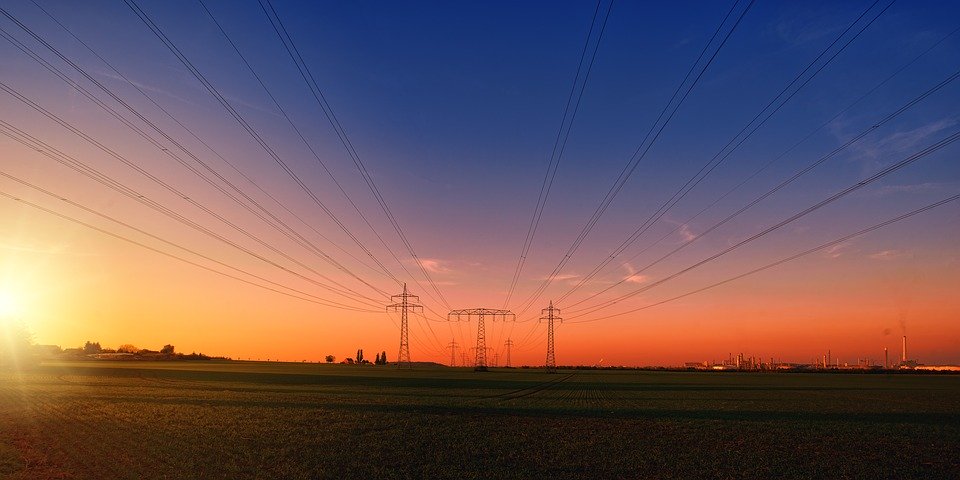
The electrical grid that powers our appliances, lighting and other electrically-powered devices has three main functions: generation, transmission and distribution. This is created by a highly complex network, through which energy travels via a fixed infrastructure made up of power stations, and transmission and distribution lines spanning the country.
This is powered by seven regional entities known as grid operators (otherwise known as balancing authorities or system operators), who are responsible for the management of energy production and delivery. They also monitor the power grid to ensure enough energy is distributed throughout the transmission lines and distribution network.
How Do Power Plants Produce Electricity?
Electricity is not naturally-occurring, which means it needs to be produced using a power plant. This is most frequently achieved using electromechanical generators driven by heat engines. These engines are in turn can be fuelled by a number of energy sources such as:
- Renewables including wind, solar and hydropower
- Nuclear fission
- Fossil fuels such as coal and gas
Turbine Generators
The power a plant emits is measured in megawatts (one million watts). The energy provided by sources such as renewable fuels creates kinetic and chemical energy to generate electricity. This is done using a turbine generator.
To generate this electricity, a turbine generator operates by pushing fluid. This can be in the form of steam, air, water or combustion gasses produced by exhaust from combustion. The turbine’s rotor shaft then converts the rotor’s kinetic energy to electricity.
Transformers
The role of the transformer is to move electrical energy from one circuit to another via electromagnetic induction, which is where a current or voltage is produced inside a conductor with a changing magnetic flux. Transformers can also increase or decrease AC voltage, a process known as “stepping up” or “stepping down” the voltage. This typically occurs once electricity has exited the power plant.
Substations
Substations contain fuses that split the current into multiple lines of distribution via switches, circuit breakers and capacitors. The grid operators can then control and isolate the interface between distribution and high-voltage power lines.
Interconnection Links
The two types of connection for interconnections are known as High Voltage Direct Current (HVDC) and High Voltage Alternating Current (HVAC). Direct current ties have some advantages over high voltage links, such as a greater capacity to facilitate reliable control of the volume and direction of power flow, thus enabling transient stability limits.
How Does the Power Grid Operate in Texas?
Much of America’s power grid operates along a complex network of transmission lines and power plants divided into three main geographic areas known as interconnections. While Eastern and Western Interconnections can transfer power (on a limited basis) from one to the other, Texas relies almost exclusively on ERCOT (The Electrical Reliability Council of Texas) to power the state.
What Risks are there to the Power Grid?
So much of how modern life functions depends on the power grid, yet it can be vulnerable to serious issues such as cyberattacks and weather-related events. Fortunately, increased security measures and technical management processes create a smart grid helping to protect the power grid from shutting down.
To find out more about how electricity works, visit Energy Texas, where you can also discover ways to save money as well as energy in your home or place of business.
