There’s no single secret sauce when it comes to what technologies best serve the modern workforce. Innovation is seemingly everywhere, and capitalizing on the tools that are truly right for your business will upgrade workers’ respective efficiencies, teams’ combined collaborative capabilities, and specific workflow adaptability. We’re talking about (but aren’t at all limiting this topic to) communication technologies, project management resources, cloud computing, enterprise-grade cybersecurity measures, responsibly trained (and prompted) general automation and AI, and accessible learning and development platforms. Again, this list isn’t exhaustive (but it sure does cover many of the big hitters, so to speak).
Examples herein include:
- Communication: Email, instant messaging and video conferencing software, platforms like Microsoft (News - Alert) Teams, Zoom, Slack and Asana for facilitating real-time collaboration, unified storage via Google Drive or OneDrive/SharePoint, etc. Establishing clear communication protocols is essential for overcoming project delays and decreased productivity.
- Project Management: Digital platforms for organization and execution that provide a centralized environment; this typically features functionalities like task prioritization, scheduling, budgeting, resource allocation, document sharing, reporting, etc. Leveraging these can help streamline workflows and address scope changes, resource constraints, and new directives that often take projects in different directions.
- Cloud Computing: By enabling users to store, transfer, send and access files and software via the cloud, traditional hardware and other on-prem technologies aren’t super necessary. (Especially for remote/hybrid work settings, given dynamic global workforce changes since the COVID-19 pandemic.) Integration of cloud-based productivity suites (e.g. Microsoft 365, Google (News - Alert) Workspace) supports teams’ efforts while lowering operational costs.
- Cybersecurity: The impacts of nasty threats (e.g. crippling data breaches, ransomware, etc.) escalate alongside the increasing availability of modern technologies; they co-escalate, unfortunately. Reliance on interconnected systems only heightens the need for robust security practices. The right protections minimize human error in vulnerable processes, expedite the detection and response to bad actors’ tactics, and reduce harrowing operational disruptions (and damages to financials and organizations’ reputations, to boot — 2FA/MFA (News - Alert), end-to-end encryption, professional monitoring, employee training, zero trust security models, and so on).
- Automation/AI: Recent strides made in the development and legitimate improvement of autonomous systems and artificial intelligence have altogether leveraged what seems like untold computational power and the near-instant analyzation of vast datasets, enabling breakthroughs in areas like computer vision and natural language processing (NLP). In many sectors, AI automates routine tasks in healthcare fields, industrial manufacturing, customer-facing processes, etc.
Admittedly, there’s also valid crossover between these topics that we can’t cover in a single article.
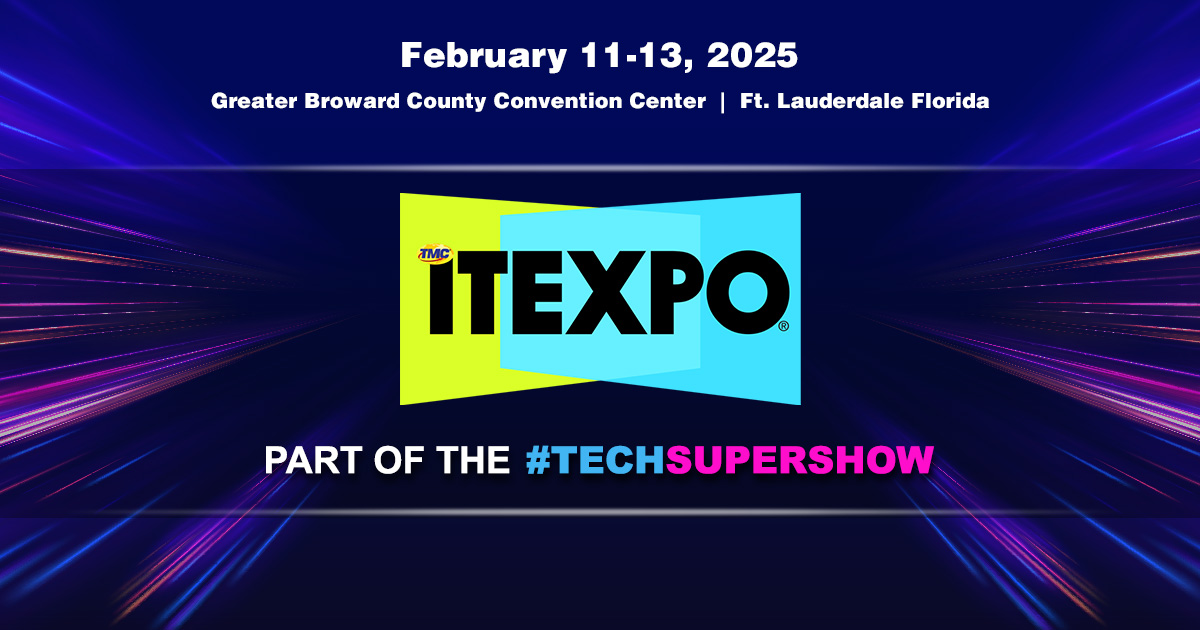
To learn more, we highly recommend registering for the upcoming ITEXPO 2025, which will be taking place from February 11-13 at the Broward County Convention Center in Fort Lauderdale, Florida. It’s part of the #TECHSUPERSHOW experience that combines educational conference programming with a robust exhibit hall, networking events and a boatload of other business-enriching activities.
Specifically, one ITEXPO (News - Alert) session is titled “Technologies to Serve the Modern Workforce” and it’ll do greater justice to everything detailed above. Its panelists will explore modernization-focused tips and tricks, and channel partners can learn how to identify and deliver comprehensive workplace solutions to their customers in order to drive big-time business value in 2025. (This session is happening on Wednesday, February 12 from 12:00-12:45 PM.)
More general expo info is found here.
Edited by
Greg Tavarez