
TMCnet News
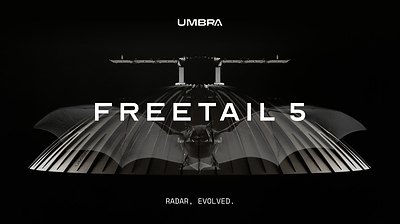
Umbra Introduces Freetail, a Next-Generation U.S.-Built Satellite Platform, Enabling a New Era of Space-Based SAR Imaging, Intelligence, and Multi-Mission OperationsThe first model, Freetail 5, combines a 5-meter high-gain antenna with software-defined mission flexibility on a 200-kg-class spacecraft. Launch-ready in the first quarter of 2028, with commercial availability by midyear. SANTA BARBARA, Calif., Nov. 23, 2026 /PRNewswire/ -- Umbra, an American space technology company, today unveiled Freetail, its family of U.S.-built, multi-mission satellites ushering in a new era of space-based intelligence. The first model, Freetail 5 (FT-05), introduces the next evolution of Umbra's synthetic aperture radar (SAR) system, combining patented mesh antenna technology, improved geolocation accuracy and expanded multi-mission capabilities on a highly agile 200-kg-class spacecraft. With significantly increased radar transmit power, exceptional stability, low inertia, and improved microwave efficiency across 20 square meters of deployed area, Freetail is engineered to bring performance traditionally associated with much larger satellites and deliver best-in-market payload range, sensitivity and resilience.
Designed for U.S. and allied operational and advanced research missions, the new spacecraft refines a proven system and pairs Umbra's high-gain mesh antenna and RF payload - configurable up to 4 GHz of imaging bandwidth - with a software-defined architecture that can continuously evolve capabilities on orbit. This combination enables Umbra to tailor spacecraft capabilities for specific mission requirements and support radar imaging with hundreds of high-quality 25 cm images per satellite per day, extending to resolutions as fine as 5 centimeters. Freetail 5 is launching in 2028. "The next generation of space capability will be measured by what each spacecraft can achieve," said David Langan, CEO of Umbra. "We're building Freetail 5 to deliver te performance, resilience and mission flexibility of much larger systems in a highly agile platform. With four times the radar power, twice the antenna area and hourly global revisit, Freetail 5 is designed to collect more across greater areas to deliver unprecedented operational value. Because we design, build and fly our own systems, we're able to translate hard-won experience on orbit into engineering breakthroughs that push the limits of physics and redefine what each spacecraft can do. Freetail 5 represents a new standard for space-based intelligence that will create significant advantage for the United States and its allies." Multiple Missions Umbra's proven SAR systems deliver high-fidelity intelligence to customers today, supported by a growing portfolio of advanced technologies already demonstrated on orbit. Building on that foundation, FT-05's enhanced payload will support single-, dual- and quad-polarization image products, ensuring customers receive superior quality, product diversity, and latency. The spacecraft will operate in both polar and mid-inclination orbits, allowing for global access with more frequent collection over priority regions. FT-05 can be configured to support a broad range of mission requirements and applications:
American-Made and Manufactured The FT-05 system is being manufactured at Umbra's 50,000-square-foot facility in Goleta, California. The spacecraft deepens Umbra's vertical integration, with 100% Umbra-developed flight software and 90% Umbra-built components, the highest share of any Umbra spacecraft to date. Refined over 14 missions, the FT-05 bus architecture utilizes flight-proven selective redundancy across critical subsystems. Its mass and volume allow the spacecraft to be compatible with dedicated launch and rideshare configurations across U.S. and international launch providers. The spacecraft accommodates hosted payloads, including sensors, communications equipment and processors. With Freetail, Umbra is expanding the missions its spacecraft can perform while continuing to advance the SAR capability at the foundation of its business. The first planned system is expected to launch in early 2028, with a larger constellation to follow. Contact: [email protected]
SOURCE Umbra 
|

 View original content to download multimedia: