
TMCnet News
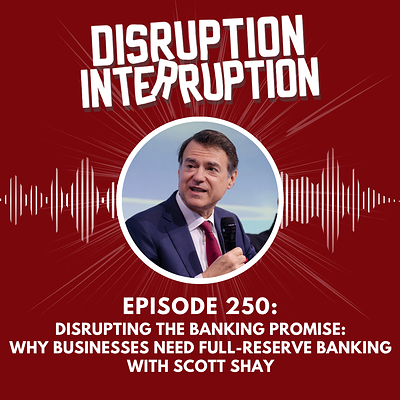
Disrupting Business Banking: Scott Shay Challenges the Fractional-Reserve ModelOn Disruption Interruption, Scott Shay, Founder of N3XT, explains why traditional banking can expose businesses to risks they may not realize they are taking and how full-reserve banking could give companies more certainty over the money they hold and move. TAMPA BAY, Fla., Oct. 8, 2026 /PRNewswire/ -- According to the Federal Deposit Insurance Corporation (FDIC), estimated uninsured domestic deposits at FDIC-insured institutions rose $233.5 billion in the first quarter of 2026. FDIC insurance generally covers up to $250,000 per depositor at each insured bank. Businesses holding larger balances may therefore have deposits that are not fully insured. Scott Shay, Founder of N3XT, joins host Karla Jo Helms (KJ) on the Disruption Interruption Podcast to question what businesses assume happens after money enters a bank account and why moving that money can still take days. "When you put your money in the bank, you think it's there for you," Shay says.
What Businesses Assume About a Bank Deposit Shay describes fractional-reserve banking as a system in which customer deposits support loans and other bank assets while account holders continue to see a balance available to them. For businesses holding substantial operating cash, he says that creates exposure to decisions they may know little about. "You don't know what they've done," Shay says. "You know they have a balance sheet. You know once a year it is audited, but you basically take your money, put it in a big pile with all sorts of other depositors, and trust that the bank will invest it well." That risk becomes visible when a bank's assets lose value or become difficult to liquidate. Shay points to the 2008 financial crisis, when long-term mortgage exposure contributed to failures and government intervention across the financial system. He does not argue that lending should disappear. He argues that depositors should know when their capital is being used to support it. "Let's be transparent," Shay says. "Let's be fair to the people who are providing the capital." Payments create a second concern for businesses moving large sums. Traditional transfers can pass through settlement windows and intermediary banks before funds become final and available to the recipient, leaving working capital tied up during the process. For Shay, the infrastructure itself is overdue for modernization. "I just recognized how so 1970s and '80s our rails are," he says. Full Reserves Meet Real-Time Settlement Shay built N3XT around a full-reserve model in which deposits are not lent to borrowers. Instead, he says customer funds are held in cash and short-term U.S. Treasuries, generally with maturities of about one month or less. "We're the only bank in the Uited States where all your money is there all the time, we don't lend it out," Shay says. The reserve model is paired with a blockchain-based core designed for real-time business payments. Shay says transfers settle in seconds, making the funds available to the recipient immediately instead of leaving the transaction pending through traditional settlement cycles. "When you move money with us, if I move a million dollars to you, you can spend that million dollars seconds later," he says. "As soon as it shows up, you can spend it." Shay points to shipping and logistics because payment often depends on confirming that goods have arrived and the required trade documents are in order. In a typical transaction, he says, one party may have to prepay, accept credit risk, or arrange a letter of credit while the shipment is in transit. N3XT can program the transaction so that once delivery is verified, the payment, bill of lading, certificate of origin, and other approvals move together. For Shay, the broader goal is to make business payments work more directly for the parties completing any transaction. "Money should work for the buyer and the seller, not just for the bank," Shay says. Links Disrupting the Banking Promise: Why Businesses Need Full-Reserve Banking with Scott Shay Disruption Interruption is the podcast where you will hear from today's biggest Industry Disruptors. Learn what motivated them to bring about innovation and how they overcame opposition to adoption. LinkedIn: https://www.linkedin.com/in/scott-shay About Disruption InterruptionTM About Scott Shay About Karla Jo Helms References
Media Inquiries:
SOURCE Disruption Interruption 
|
 View original content to download multimedia: