
TMCnet News
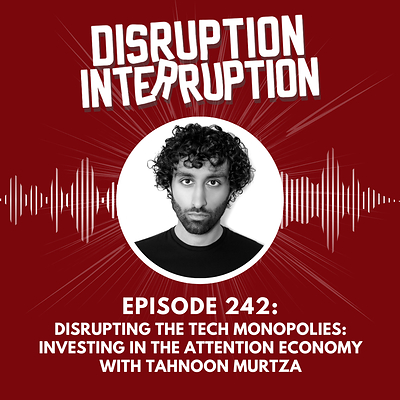
Disrupting Venture Capital: Why AI Killed Proprietary Tech as a MoatOn Disruption Interruption, Tahnoon Murtza explains why easier-to-build technology is reshaping early-stage investing and putting more value on distribution, audience access, and authentic founder relationships. TAMPA BAY, Fla., Aug. 13, 2026 /PRNewswire/ -- U.S. venture investors deployed $320 billion across 15,352 deals in 2025, while artificial intelligence companies captured 65.4% of deal value, according to the National Venture Capital Association's (NVCA) 2026 Yearbook. Yet the same tools attracting investment are also making software faster to build and easier to replicate. On this episode of Disruption Interruption, host Karla Jo Helms speaks with Tahnoon Murtza, Founding Partner of Grey Sheep Ventures, about how that AI is changing what investors should consider defensible in an early-stage company. "The way people are building companies is inherently different," Murtza says. "So, the way you fund companies has to be inherently different."
Product Alone Is Not Enough to Win the Round Murtza's first challenge to the traditional venture model is the assumption that technology itself can protect a startup from competitors. He argues that AI tools such as Lovable and Claude Code have lowered the barrier to building software, making some products much easier to replicate. "You can build a tech company in a weekend," he says. "You don't have to be technical. And so, there's no such thing as proprietary tech." That question is particularly important in consumer investing, where consumer goods and services accounted for just 5% of U.S. venture capital deal value in 2024, according to the NVCA's 2025 Yearbook. When competitors can reproduce a product, investors must look beyond the technology itself. "What is the moat?" Murtza asks. "When you take a product that everyone can build, how can you distinguish? It's by having a distinguished voice, having distinguished access to getting the attention of your customers." The issue is that many legacy funds still evaluate companies through an outdated perspective. Murtza sees a generational gap between the investors making decisions and the founders operating in a world shaped by for short-form content, micro-influencers, creator-led distribution, and conversion-driven attention. "There needs to be more younger people involved and more decision-making authority within funds in general," he says. When Capital Is Not Enough Grey Sheep Ventures applies that thesis to consumer startups, where Murtza evaluates not only what founders are building but how effectively they can reach the people most likely to buy it. His approach also challenges the assumption that investors hold the strongest position in the founder-investor relationship. "If yo're a good founder, it's a privilege as an investor to be able to get onto your cap table," Murtza says. That mindset also changes what Murtza believes as an investor owes a portfolio company. He describes himself as the "phone-a-friend-emergency guy," helping founders with influencers, private equity connections, distribution, and other needs beyond capital. "I almost view myself more as I'm an employee who pays them," he says. Grey Sheep has profited from that approach, winning investment allocations even when larger established funds were competing for the same opportunities. "Authenticity and generally being connected to the type of founders you're trying to back is becoming the biggest moat as a venture capital fund," he says. Murtza's longer-term vision is a hybrid between an accelerator and a fund, bringing creators, influencers, and early-stage consumer founders together with capital and operators who can help turn audience trust into durable businesses. He cautions, however, that access to an audience does not make company-building easy. "If you want to build something authentic, it takes copious effort, it takes obsession, it takes a consuming amount of time," Murtza says. "If you're going to commit to that, you want a VC partner who's going to put the same effort into your company that you are." Links Disrupting the Tech Monopolies: Investing in the Attention Economy with Tahnoon Murtza Disruption Interruption is the podcast where you will hear from today's biggest Industry Disruptors. Learn what motivated them to bring about innovation and how they overcame opposition to adoption. LinkedIn: https://www.linkedin.com/in/tahnoon-m-b4071419a/ About Disruption InterruptionTM About Tahnoon Murtza About Karla Jo Helms References
Media Inquiries:
SOURCE Disruption Interruption 
|
 View original content to download multimedia: