
TMCnet News
First Ever, Data-Driven Outcome-based Analysis and Ranking of Privately Held Global Defense Tech Companies ReleasedFuture Union's All-World Defense 300 evaluates firms by solutions, solving the most critical challenges facing allied governments — mapping strengths of the alliance and gaps WASHINGTON, July 30, 2026 /PRNewswire/ -- Today, Future Union, a post-partisan organization dedicated to mobilizing private capital and enterprise released the All-World Defense 300 and its companion index, the Allied Defense 100. The lists highlight the private companies at the forefront of international defense innovation. The All-World Defense 300, a data-driven assessment of private sector companies, analyzes the defense technology landscape and evaluates, scores, and ranks companies that have proven critical technological capabilities. The Allied Defense 100 includes the defense tech innovators setting new standards that are still scaling. Together the lists constitute the first global ranking of the private companies underwriting the growing defense tech sector based on demonstrated, fielded capability rather than fundraising, revenue or public market capitalization. Global consulting firm Ankura Consulting, global law firm Ashurst Perkins Coie, and Silicon Valley Bank, a division of First Citizens Bank, contributed to this effort.
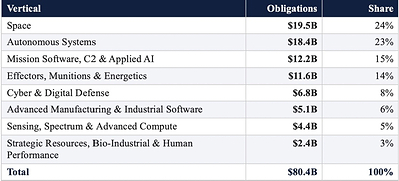
"The All-World Defense 300 examines real, deployed capabilities across the United States and our allies to provide the global defense industrial base with actionable intelligence to identify gaps and areas of potential oversaturation," said Andrew King, founder of Future Union. "Due to ongoing conflicts around the world, for the first time we are seeing a significant shift in capabilities from the U.S. to its allies, especially in strike capability, with allied companies now outnumbering their American counterparts, 22 to 17. The Allied Defense 100, meanwhile, examines innovations on the verge of scale; emerging companies that have tangible solutions which could place them in the All-World Defense 300 in the future." The United States retains command of the foundational tiers of allied power, holding 100 percent of the top production ("Arsenal") tier in both advanced compute and strategic resources, and 79 percent of the Arsenal tier across all eight verticals. "The U.S. government has committed billions of dollars to support the next generation of defense, including mission-critical systems that are essential to safeguarding national interests and make the U.S. Department of War more operationally efficient," said Jim Brenner, partner at Ashurst Perkins Coie. "The All-World Defense 300 are shaping the future of defense, they are the companies that will realize innovations such as the Golden Dome, Replicator, Agentic AI, and the next challenge we have not yet imagined." The lists were developed by Future Union using primary source data to include FAR-based contracts, OTAs, SBIR/STTR awards, DPA Title III funding, and global procurement announcements, which were then combined through a scoring system weighted by government-contract demand (55%), independent comparable capabilities (30%), and resource availability (15%). Demonstrable success and capabilities were taken into account, and each vertical is segmented into three categories: Arsenal (foundational and fielded at scale), Forge (scaling and magnified importance), and Spark (innovation and notable for its current ptential). "This represents one of the first truly global views of where the United States and its allies stand, and where further capability development is needed," said Frank Edwards, Senior Managing Director at Ankura. "The All-World Defense 300 highlights how rapidly commercial innovation is shaping modern defense and reinforces the importance of collaboration across companies and nations." Of the 300 companies, 92 are headquartered outside the United States, spanning 26 nations. The international base has matured into an increasingly capable "Sovereign Stack," concentrated in distinct regional centers: the United Kingdom in deep technology, Israel in cyber-kinetic systems, Ukraine in combat-proven autonomy, and an ascendant Turkey in uncrewed systems and armor. However, more than mere defense tech, the list highlights the often overlooked, "Shadow Primes" and industrial companies that are essential to supply chains, systems and tech-enabled advances, the absence of which would render inoperable most technology-centric production. "We work with founders across the defense sector, to help them achieve their business growth goals," stated Dax Williamson, Managing Director and head of the Aerospace, Defense & Security Innovation Group at Silicon Valley Bank, a Division of First Citizens Bank. "The All-World Defense 300 and the Allied Defense 100 indices highlight the founders and companies across the defense sector that have significant opportunities ahead and we aim to support growing companies as they develop." Both indices will be published annually. Future Union also announced a weekly leaderboard tracking defense contract awards across the United States and its allies, updated every Monday. The aim is to bring public competition to a procurement process that has long operated in the shadows — and to press allied governments toward disclosure standards that make real scorekeeping possible. Both lists are available at FutureUnion.co. About Future Union About Ankura Consulting About Ashurst Perkins Coie About Silicon Valley Bank
SOURCE Future Union 
|

 View original content to download multimedia: