
TMCnet News
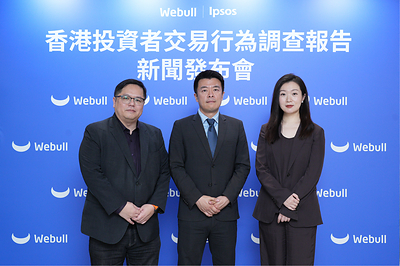
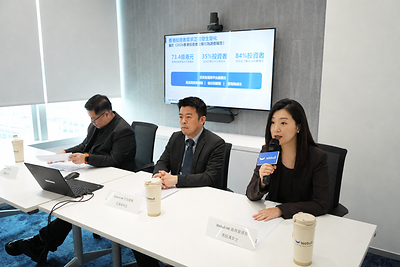
Hong Kong Investors Pay Over HK$7.3 Billion in Annual Trading Fees, 65% of Investors Underestimate Impact of Trading fees on Returns, The Era of AI Agentic Trading Could Further Amplify Trading FrictionHong Kong investors pay an estimated HK$7.34 billion in total trading fees each year for Hong Kong and US stock transactions, averaging HK$2,094 per person annually. According to the 2026 Hong Kong Investor Trading Behavior Study, trading fees have become a major factor affecting investment returns – yet most investors continue to underestimate their long-term impact. HONG KONG, June 11, 2026 /PRNewswire/ -- As artificial intelligence (AI) technology rapidly evolves, global financial markets are entering a new era of agentic trading. However, for retail investors to truly benefit from the potential of intelligent trading, trading friction must first be significantly reduced. Webull Securities Limited ("Webull HK"), a subsidiary of Webull Corporation (NASDAQ: BULL), the owner of the Webull trading platform, today released the 2026 Hong Kong Investor Trading Behavior Study, conducted by independent market research firm Ipsos. The study systematically analyses the trading habits, fee awareness and platform selection criteria of Hong Kong retail investors and quantifies the impact of trading fees on long-term investment returns. The research was commissioned by Webull HK, with Ipsos independently designing the questionnaire, conducting the fieldwork and authoring the report.
Hong Kong Investors Pay Over HK$7.34 billion in Annual Trading Fees – Long-Term Returns Eroded The report estimates that total annual trading fees (including platform fees and commissions) paid by Hong Kong retail investors for Hong Kong and US stock transactions amount to approximately HK$7.34 billion, with average annual trading fees per person reaching HK$2,094. These costs may appear modest on a per–trade basis, but they accumulate year after year through the compounding effect, creating a structural drag on long–term asset growth. Under a hypothetical 10% annual investment return, active traders could lose more than 20% of their investment returns over five years due to trading fees, and more than 50% over ten years. Historically, high–frequency trading was often seen as a sign of poor investment discipline. However, the report points out that the core issue is not the number of trades itself, but the friction cost attached to each transaction.
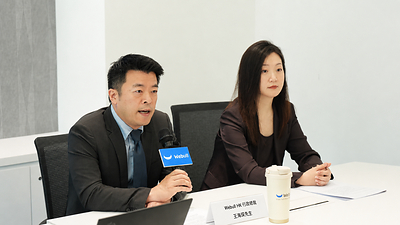
65% of Investors Underestimate the Impact of Trading fees – 35% Have Never Calculated Their Annual Fees The report also reveals that investors generally lack a clear grasp of their own trading fees. Up to 65% of respondents still believe that trading fees have a "moderate, small, or almost no impact" on investment returns. 35% have never calculated their annual trading fees, and 84% are not fully aware of the components of the fees they pay. This indicates a widespread underestimation of the long–term compounding effect of trading fees. Such information asymmetry not only affects investment decisions but also undermines investors' ability to compare the true costs of different platforms. "Commission–Free" Does Not Equal Zero Cost – Limited Awareness of Actual Fee Structures In terms of awareness of different fee types, 67% of respondents are aware of trading commissions, but only half know about platform fees. Awareness of deeper charges such as custody fees, depository fees and dividend handling fees is below 50%. The study reflects that while investors generally know they must pay fees, many do not truly understand where those fees come from or the actual cost differences between platforms. Online Brokerages Offer Significant Price Advantage, Laying the Foundation to Reduce Trading Friction The report shows that 59% of respondents use online brokerages to trade Hong Kong or US stocks, and in the US stock market, the penetration rate of online brokerages reaches as high as 78%. Younger investors show significantly higher acceptance of online brokerages, with a 79% usage rate among the 30–39 age group – in contrast to the preference for banking among those aged 50 and above. The report further reveals that online brokerages have the lowest average annual per–person trading fees for Hong Kong and US stock transactions (HK$1,188). Banks charge 22% more than online brokerages (HK$1,444), and traditional securities firms charge 78% more (HK$2,112). This gap reflects the structural efficiency advantages of online brokerages and demonstrates that reducing trading friction is not impossible – it depends on a platform's technology architecture and business model. When it comes to platform selection factors, respondents place the greatest importance on "Product & User Experience" (74%), followed by "Trust & Service" (68%) and "Costs & Fees" (62%). These results indicate that when choosing a trading platform, investors are not simply looking for the lowest fees, but rather consider platform stability, brand credibility, fee transparency and overall service quality in a comprehensive manner. The Era of AI Agentic Trading Has Arrived – Zero–Fee Model Lays the Groundwork The findings of this study are highly consistent with the global technological transformation underway in the brokerage industry. Anthony Denier, Group President and CEO of Webull Corporation, noted during the Q1 2026 earnings call: "We are at a true turning point in financial services. Over the past ten years, the competitive focus for retail brokers has been the user interface – who has the cleanest, most intuitive app. But a new dimension of competition has opened: the interface of the future is not the screen on your smartphone – it is the API." Webull has already deployed an MCP (Model Context Protocol) server, enabling third–party AI agent platforms to securely connect with Webull's trade execution infrastructure – positioning Webull as the preferred execution and custody layer in the emerging AI agent ecosystem. In addition, Webull has been actively building out its AI product line globally. Its AI research tool, Vega Analyst, is currently being tested, allowing retail investors for the first time to access institutional–grade sell–side research depth on demand. Webull also plans to launch AI Portfolio within the year, enabling AI agent–driven portfolio construction and trade execution – making strategy tools that were once reserved for institutional investors progressively available to retail investors. Mr. Wang Haichen, Chief Executive Officer of Webull HK, said: "The findings of this Ipsos study confirm a core issue in our industry: trading friction is a hidden tax on retail investors, and the cumulative effect is particularly significant for active traders. As AI agents help investors analyze markets in real time, optimize portfolio allocations, and automatically execute trading strategies, the friction cost per trade becomes even more critical – if every trade executed by an AI agent incurs a commission and platform fee, the frequency advantage of intelligent trading will instead turn into a cost burden."
Mr. Wang added: "Webull HK is the first broker in Hong Kong to offer true 'zero commission, zero platform fee' for both US and Hong Kong stocks. Our goal is to eliminate trading friction at its source, so that in the coming era of AI agentic trading, investors can fully unlock the value of intelligent strategies rather than surrendering their returns to friction costs. As investors pay more attention to actual trading expenses, platform competition will gradually shift from a pure price war to competition based on transparency, technological innovation, and overall ecosystem experience."
About Webull HK About Webull About Ipsos Founded in France in 1975, Ipsos has been listed on the Euronext Paris since July 1, 1999. The company is part of the SBF 120, Mid-60 indices, and is eligible for the Deferred Settlement Service (SRD). ISIN code FR0000073298, Reuters ISOS.PA, Bloomberg IPS:FP , website: www.ipsos.com
SOURCE Webull Securities Limited 
|

 View original content to download multimedia: