
TMCnet News
Verified Accuracy in Radon Detection: Why Third-Party Certification is the Only Way to Ensure Home SafetyAirthings warns that uncertified, low-cost sensors provide a "false sense of security" that risk prolonged exposure to lung cancer-causing radon gas OSLO, Norway, May 5, 2026 /PRNewswire/ -- Verified accuracy in radon monitoring is the only way to prevent "false safety" readings that leave families unknowingly exposed to dangerous levels of radon gas. As the public's awareness of radon has grown in recent years, so has the market of monitoring solutions available for consumers. More homeowners than ever are turning to digital detectors to better understand their exposure to radon. The market is rife with dozens of devices, including many new options that are aggressively discounted and marketed online providing inaccurate measurements, making choosing the right radon detector an increasingly confusing, complex decision that requires due diligence from the consumer.
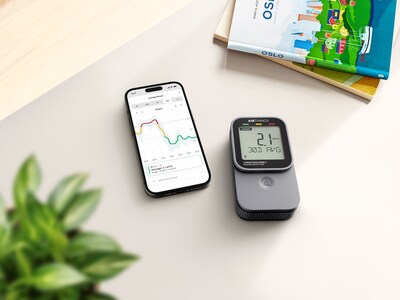
Airthings urges consumers to opt for established choices with third-party certification when choosing a radon detector Continuous digital radon testing is generally more accurate than traditional short-term charcoal testing systems, but that is heavily dependent on the digital device's components, primarily its sensors and software. These components are critical to provide accurate, science-backed readings, and are not visible to the eye, making it virtually impossible for consumers to distinguish. For today's consumer, the challenge is not just learning about why radon testing is important, but identifying which devices can be trusted. Online marketplaces such as Amazon and Temu feature a growing number of low-cost radon detectors that often appear well-reviewed and comparable in design to established brands. However, these listings can be manipulated through misleading images, product descriptions copied from other vendors, and questionable review practices. This leaves consumers in a tough position where they are often left comparing products that look nearly identical on the surface. The consequences of a radon detector that provides misleading data can be significant. For example, if a family is led to believe that their radon levels are safe based on readings from a radon monitor that uses balky technology, they can potentially be exposed to dangerous radon levels unbeknownst to them. On the contrary, if an unreliable sensor is overestimating radon levels, it can cause undue panic and financial stress for homeowners, leading to thousands of dollars spent on professional radon mitigation that could realistically be avoided with much simpler, cost-effective measures. Fortunately, there are a multitude of verified, trustworthy resources available to consumers to help guide them through the process to select an accurate radon monitor. Your family's health shouldn't be compromised or left to chance, use verified resources to ensure the radon monitor you choose delivers accurate, reliable readings. A Look Under The Hood: Why Sensor Technology Matters Airthings, a global leader in indoor air quality solutions, exemplifies this approach. In the United States, Aithings' Pro mode professional-grade radon monitor is certified by both the American Association of Radon Scientists and Technologists National Radon Proficiency Program (AARST-NRPP) and the National Radon Safety Board (NRSB). In Canada, Airthings' Corentium Pro is certified by the Canadian National Radon Proficiency Program (C-NRPP). The very same sensors and technology certified in these devices are used in Airthings' consumer models like the Corentium Home and View Plus, which are also recommended for residential use by C-NRPP. These certifications are achieved through independent, rigorous testing under controlled conditions to ensure accuracy, reliability, and consistency. Most low-cost options available for purchase online cannot make these claims or meet these standards, and some have even been subject to recalls in recent years after closer scrutiny. Spotting the Difference
Trusted by Professionals and Retailers Beyond certifications and laboratory testing, reputation in real-world applications is another critical indicator of reliability. Airthings detectors are widely recommended by independent radon mitigation specialists and home inspectors throughout North America, who prioritize proven accuracy over brand loyalty. Airthings products are also found everywhere from school districts and classrooms to corporate headquarters of Fortune 500 companies, underscoring their established efficacy. In retail, Airthings devices can be found in brick-and-mortar stores such as The Home Depot and Ace Hardware, which conduct their own stringent vetting of products they carry. The Importance of Long-Term Monitoring If you're interested in measuring your home's radon levels but find that a radon detector is not yet the best choice for you, there are other options available. You can obtain a charcoal test kit, which is often free, from the American Lung Association (ALA), the EPA, or your local health department. These passive tests can confirm the presence of radon, after which a trusted continuous monitor can be used to track levels over time, particularly after mitigation efforts. Empowering Consumers to Make the Right Choice About Airthings Airthings has sold over 1.5 million devices worldwide. The company and its products have earned several accolades, including the TIME Best Inventions Award and CES Innovation Award Honor. Headquartered in Oslo, Norway, with additional offices in the United States, Airthings continues to innovate and educate on the importance of continuous indoor air quality monitoring. For more information on Airthings' comprehensive range of IAQ solutions and the benefits of healthy indoor air, please visit airthings.com. Media Contacts: Ruben Marinbach
SOURCE Airthings 
|

 View original content to download multimedia: