
TMCnet News
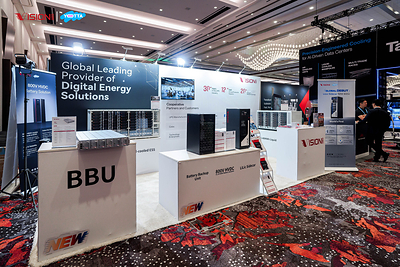
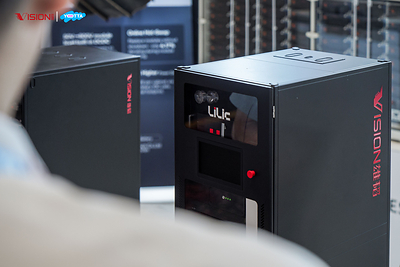
LiLic Sidecar Debuts at YOTTA 2026 as Vision Group Showcases New Power Solutions for AI InfrastructureLAS VEGAS and NEW YORK, Oct. 4, 2026 /PRNewswire/ -- Vision Group showcased its portfolio of AI data center (AIDC) power and energy storage products at YOTTA 2026 in Las Vegas on September 29–30, marking the first public appearance of LiLic Sidecar. Addressing the growing need for high-power delivery, flexible backup power, and integrated backup and energy storage, the company presented LiLic Sidecar, its high-voltage direct current (HVDC) power solution, battery backup units (BBU), and battery energy storage systems (BESS). Together, these solutions demonstrate a multilayered portfolio spanning battery backup, high-voltage DC power, and energy storage applications.
As AI infrastructure moves toward higher power densities, power systems must do more than provide protection during outages. They must also accommodate rapidly changing loads while addressing space utilization, power efficiency, and deployment timelines. At YOTTA 2026, Vision Group presented new products and system solutions designed to meet these requirements, bringing its technologies across battery cells, backup power equipment, and power supply and distribution systems to the global data center community. LiLic Sidecar: Combining Transient Power Support with Sustained Backup A key highlight of Vision Group's exhibit, LiLic Sidecar is designed for high-power-density AI data centers. It connects directly to an 800V DC busbar (±400V) and is compatible with the OCP ORV4 open rack standard, offering a new backup power option for high-voltage DC architectures. To address both frequent AI load fluctuations and power interruptions, LiLic Sidecar uses a hybrid cell design that combines the pulse-cycling characteristics of lithium-ion capacitors (LIC) with the backup capabilities of lithium iron phosphate (LFP) batteries. It integrates power fluctuation smoothing and short-duration backup within a single system. In a five-module operating configuration, each cabinet delivers 1MW of rated discharge power and at least 60 seconds of backup at a 1MW load, providing reserve energy for high-power compute racks. LiLic Sidecar features an All-in-One design that integrates power functions associated with CBU and BBU systems. By addressing requirements across multiple timescales—from transient response to short-duration backup—it reduces the space required for separately deployed equipment. Its integrated battery management system (BMS) and DC/DC design further reduces external connectors and cable interconnection points, simplifying system connections. Hot-swappable modules facilitate maintenance and replacement. For thermal management, the product combines immersion coling with cold-plate cooling. An electrically insulating, flame-retardant immersion coolant works alongside cold plates to address electrical safety and heat dissipation requirements in high-voltage environments. This hybrid liquid-cooling approach improves temperature uniformity across cells and supports stable system operation. Discussing the innovation behind LiLic Sidecar, Tom Qin, Vice President of Strategy and Business Management at Vision Group, said in an interview: "This is more than a product. It represents a new path for Vision Group to redefine AIDC backup power architecture." This approach reflects the company's efforts to jointly optimize power response, backup capability, and system integration around the operating characteristics of AI loads. From Backup Power to Campus Energy: Matching Solutions to Different Deployment Needs Vision Group also showcased HVDC, BBU, and BESS solutions to address power and energy storage requirements at different levels, giving customers multiple options for architecture selection, project deployment, and operational management. HVDC: Supporting 800V Power Architectures Vision Group's HVDC solution uses an 800V high-voltage DC architecture to address AI data centers' demand for efficient power delivery. The solution has been deployed at a hyperscale AI data center in Ulanqab, providing practical project experience to support further deployment of the company's high-voltage DC energy storage and backup power systems. BBU: Bringing Backup Power Closer to the Load Battery backup units extend power protection to the load side. The 72kW BBU presented at the event features a compact 2RU design and a 5+1 redundant architecture, delivering high-density backup power within a limited footprint. It also incorporates three levels of fire safety protection—at the cell, module, and system levels—to provide multilayered safeguards for backup power deployed close to computing loads. BESS: Extending Energy Value Beyond Backup Vision Group's BESS portfolio includes 5.015MWh and 6.48MWh liquid-cooled battery energy storage containers, as well as a 215kWh immersion-cooled battery energy storage cabinet, addressing energy storage needs at different scales. Where backup capacity and operating requirements are met, available surplus capacity can support peak shaving and valley filling, extending the value of integrated backup power and energy storage. Safety and Reliability as the Foundation for High-Density Computing During an industry media interview at the event, Tom Qin emphasized: "In AI data centers, high power density is important, but safety and reliability will always be Vision Group's first principle." He noted that the highly dynamic nature of AI loads places greater demands on the long-term stability of power systems, making safety essential throughout the product lifecycle. Citing the large-scale indoor fire test of Vision Group's REVO 3.0 lithium battery system for UPS applications, Qin described the company's approach to validating system-level safety under extreme conditions. From fire testing to the BBU's multilayered fire protection, Vision Group incorporates safety requirements into both product design and validation to support continuous, stable power delivery in high-density data centers. Strengthening Its North American Presence with Global Delivery Capabilities Beyond product innovation, global delivery and localized service were also key topics in the interview. "North America is a strategic market for Vision Group and will be a key focus of our future efforts," Tom Qin said. Serving global cloud providers and data center operators, Vision Group will continue to strengthen its technological innovation, delivery, and service capabilities while deepening collaboration with industry partners. Founded in 1994, Vision Group has built extensive experience in backup power, with a business presence spanning more than 100 countries and regions. Supported by manufacturing facilities in Vietnam and other locations, together with its overseas service network, the company provides delivery, compliance certification, and after-sales support. It also maintains collaborations with companies including Eaton, Vertiv, Schneider Electric, and Delta to align its products and solutions with customers' practical application requirements. From the debut of LiLic Sidecar to its multilayered HVDC, BBU, and BESS portfolio, Vision Group is advancing its "All in AIDC" strategy by expanding from individual backup power products to integrated power supply and distribution solutions. Its appearance at YOTTA 2026 highlighted the company's AIDC technologies and product portfolio while providing an opportunity to deepen engagement in North America and expand collaboration across the global industry ecosystem. To learn more about LiLic Sidecar and Vision Group's AIDC power solutions, contact the Vision Group team to discuss power supply and backup configurations tailored to your project.
SOURCE Vision Group 
|
 View original content to download multimedia: