Consider what a traveler asks of a restaurant on the first night in an unfamiliar city. The menu should be understandable, the order should arrive as requested, a foreign card should work without drama, and the bill should be correct in a currency the traveler barely knows. Twenty years ago, that was a coin flip in much of the world. Today it's the baseline almost everywhere, from a Lisbon rooftop bar to a Seoul barbecue joint, and most people never ask why. The answer is not better luck. It's infrastructure.
The modern venue runs on a connected point-of-sale platform that has quietly become one of the most consequential consumer-facing technologies most consumers have never thought about. Like payment networks or booking engines, it sits invisibly under a daily experience and rewrites it. For the traveler, the effects compound: every ordered drink, every split bill, every tap of an international card passes through this layer. Understanding it explains why a night out abroad in 2026 works so differently from one in 2006.
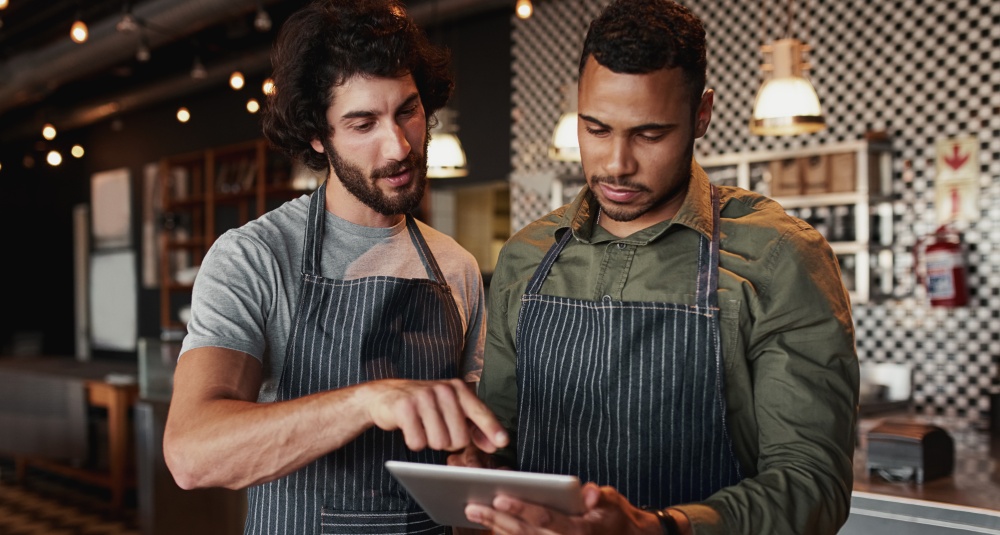
The core of the change is information flow. A restaurant on a busy night is a real-time coordination problem: dozens of tables, hundreds of orders, three or four preparation stations, and staff in constant motion. During a packed service, the difference between smooth coordination and confusion often comes down to how information flows between staff, with Table View at the intersection of ordering, payments, and the everyday demands on bar and restaurant POS systems. Platforms in this space, TableView among them, replaced the old relay of shouted orders and paper tickets with a shared digital state: every order, modification, and payment visible to the right person at the right station at the right moment.
From Cash Register to Operating System
The terminology tells the story of the shift. The cash register recorded transactions. The point of sale platform coordinates operations. In Europe, the category is usually called ePOS systems for restaurants, the E standing for electronic, and the architecture is broadly the same worldwide: a cloud-hosted core, inexpensive tablets or handhelds as endpoints, integrated card processing, and kitchen or bar display screens replacing printed tickets.
For the traveler at the table, each architectural choice surfaces as an experience:
- Handheld ordering means the request enters the system at the table, in writing, eliminating the transcription errors that once plagued cross-language dining
- Kitchen and bar screens sequence orders by station, which is why food and drinks for one table now tend to arrive together
- Integrated payments mean the same system that holds the order settles the bill, so tab errors and "mystery items" have largely disappeared.
- Cloud hosting means a small independent venue runs the same class of software as an international chain, which is why service quality has converged worldwide.
The multi-currency dividend
One under-appreciated consequence: modern integrated payment stacks handle international cards, contactless wallets, and currency conversion natively. The traveler benefit is mundane and enormous. Cash-only signs are vanishing in destinations where they were universal a decade ago, dynamic currency conversion is presented as a choice rather than an ambush, and a card issued on one continent settles a bar tab on another in seconds.
Why the Bar Is the Hard Part
Restaurants gave the category its name, but bars are its stress test. Bar service is high-frequency and low-value: many small orders, constant modifications, open tabs that grow all night, and a crowd three deep at last call all wanting to settle simultaneously. Combined venues, where a guest starts with cocktails, moves to a dinner table, and finishes with a nightcap, add a further problem: one guest, one evening, multiple service zones, and ideally one tab.
This is where integrated bar and restaurant POS systems earn their keep, and where travelers feel the technology most directly:
- Preauthorized cards opened a tab without surrendering the physical card to a cup behind the bar
- A tab opened at the bar follows the guest to the dinner table and back, across staff shifts
- Split payment logic (by item, by seat, by fraction) turned the multi-traveler bill from arithmetic theater into a two-tap operation
- Inventory decrements with every pour, so the venue knows the mezcal is running out before the shelf does
For a group of travelers ending a night in a packed venue in a foreign city, the sixty-second closeout is the technology's clearest consumer-facing achievement.
What Travelers Can Read From the Table
No consumer scorecard exists for venue software, but its presence and quality leak into observable signals. Industry buyers debate at length what constitutes the best POS system for restaurant and bar operations, weighing reliability, integration depth, and reporting. Travelers can run a simpler evaluation from their seats:
- Honest wait estimates suggest the venue tracks table turns rather than guessing
- Sold-out items disappearing from menus at order time, not after a failed wait, indicates live inventory
- Effortless split payments and instant receipts signal an integrated stack rather than bolted-together parts
- Consistent service quality late into a slammed evening usually means the kitchen is pacing from screens, not memory
None of this requires technical knowledge. A venue's software quality is, in practice, legible as service quality, and travelers who read the signals tend to spend their evenings in better-run rooms.
The Infrastructure Layer Nobody Reviews
Travel platforms rate rooms, flights, and meals. Nobody rates the coordination layer underneath the meal, which is arguably the point: infrastructure succeeds when it disappears. The connected point of sale has reached that status. It processed the traveler's order in Bangkok, held the tab in Barcelona, and split the bill in Buenos Aires, and it earned no mention in any review.
But the aggregate effect deserves one. The gap between eating out at home and eating out abroad, once a genuine source of travel friction, has narrowed to nearly nothing, and it narrowed because the software running the world's bars and restaurants converged on the same connected architecture. The traveler's smooth night out is the visible output of an invisible system doing its job. In technology, as in hospitality, that's what good service looks like.
