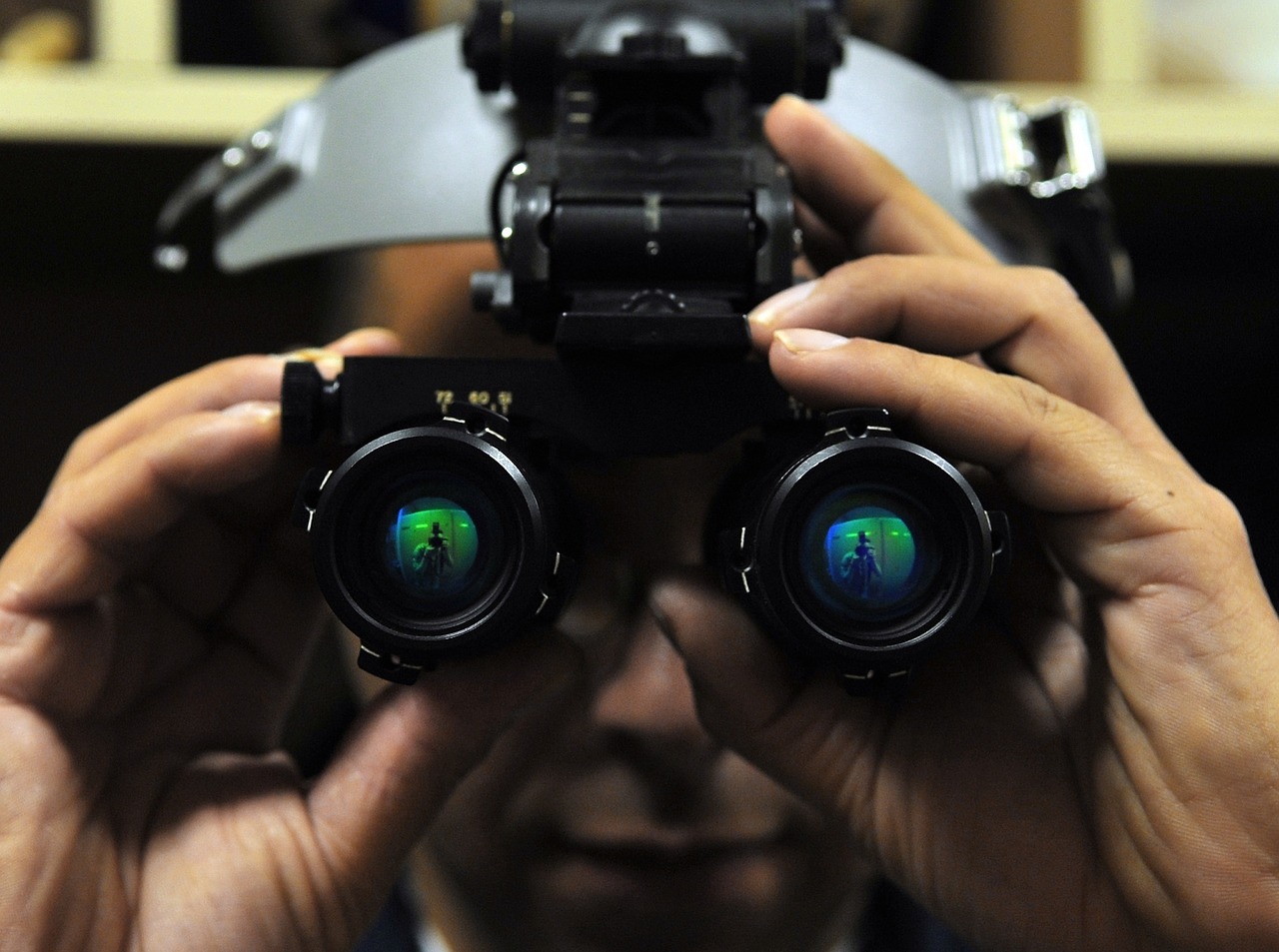
When people speak of law enforcement night vision tech, many picture nothing beyond SWAT teams or federal tactical units. In reality, however, the circle of users extends far beyond that. It includes border patrol units, K9 teams, and personnel from private security firms tasked with safeguarding industrial facilities.
Just ten to fifteen years ago, nighttime operations for specialists of this kind almost invariably meant removing a daytime optic and replacing it with a dedicated night scope. That was the accepted standard. Today, the landscape has shifted considerably. Increasingly, police departments, sheriff's offices, federal agencies, and private security companies are placing their confidence not in standalone night optics, but in a thermal clip on for rifle scope—an attachment mounted ahead of an already zeroed daytime optic.
The reason has nothing to do with trends or cost-cutting. It is far more pragmatic. Modern tactical operations rarely afford the luxury of calmly swapping optics, and under such circumstances, a modular system often proves both more practical and more effective.
Losing Zero Is No Trivial Matter
Any marksman knows how much time it takes to properly zero a rifle—particularly when dealing with a precision platform equipped with variable-magnification optics.
Installing a dedicated night scope means either confirming the rifle's zero all over again or relying on the repeatability of the mounting system. That may be manageable on a range, but in real-world operations, the opportunity to correct such issues is often nonexistent.
This is where a conventional clip-on attachment demonstrates its value. It mounts in front of the daytime scope's objective lens, while the optic itself remains undisturbed. The geometry of the aiming system is preserved. Provided the equipment is of high quality and the manufacturer has maintained precise optical alignment, the shooter does not need to alter familiar holdovers or adapt to a different reticle.
Thermal Clip-Ons or Traditional Night Scopes?
Modern tactical thermal optics operate not by amplifying residual light, but by detecting the thermal radiation emitted by objects. That distinction fundamentally reshapes their detection capabilities.
A person concealed in tall grass, for instance, may be nearly imperceptible through a conventional night vision device, especially where lighting contrast is minimal. A thermal imaging system, by contrast, can distinguish the temperature differential between the human body and its surroundings—even through vegetation, provided it is not excessively dense.
Thermal imagers offer several additional advantages:
- operation without auxiliary illumination and complete independence from moonlight;
- reliable detection of vehicles with warmed engines;
- strong performance in smoke and light fog.
Naturally, thermal imaging is not a universal solution to every operational challenge. When it comes to positively identifying a target, modern high-sensitivity night vision devices may still be the preferable choice. For that reason, many units employ both categories of equipment rather than attempting to commit exclusively to one.
Immediate Readiness Sometimes Takes Precedence
A real-world tactical deployment often unfolds in a familiar pattern. A call comes in, the team arrives on scene, and the situation evolves from one minute to the next. There is simply no time to reconfigure sighting equipment.
Against that backdrop, it becomes easy to understand why the concept of upgrading daytime scopes for night ops has gained such widespread traction.
A well-engineered clip-on can be mounted in a matter of seconds. There is no need to readjust eye relief, alter cheek weld, or acclimate to an unfamiliar reticle. The shooter continues working through the same trusted optic, with the same magnification range and the same control layout.
If the operator trains consistently with that exact configuration, the likelihood of error decreases appreciably.
Field Experience Always Outweighs Marketing
Shooters seldom become attached to a particular technology. They become attached to what consistently performs.
If a piece of equipment allows them to rely on familiar daytime optics throughout daylight hours and, within moments, acquire full-fledged thermal observation capability at night without altering the weapon's established configuration, it is exceedingly likely to remain part of the unit's operational inventory.
Which is why modular solutions are poised to continue displacing dedicated night scopes wherever speed, adaptability, and preservation of a thoroughly validated weapon setup remain paramount.
