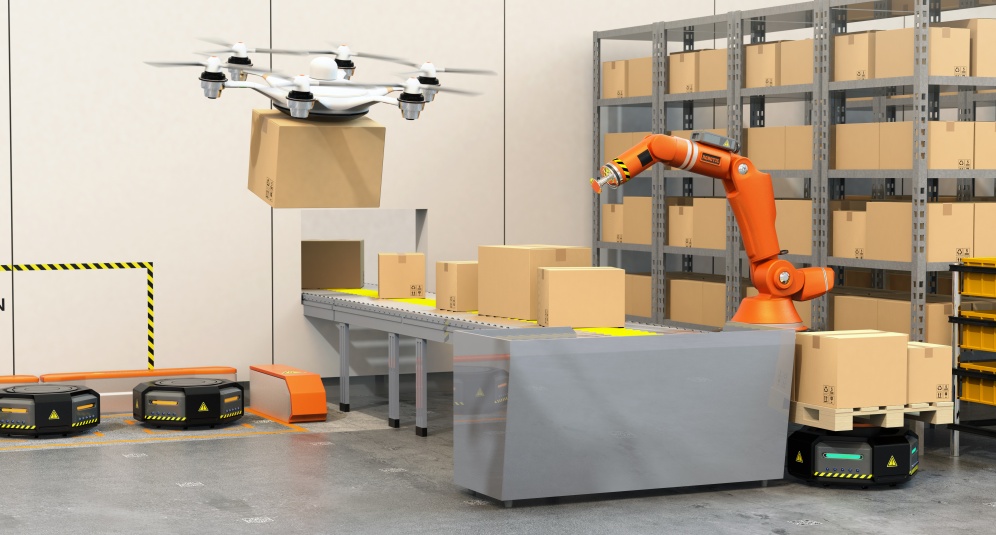
Warehouse operations are undergoing a profound transformation as companies grapple with the competing pressures of faster fulfillment expectations, persistent labor shortages, rising operational costs, and the relentless demand for near-zero error rates. Traditional, largely manual warehouses are increasingly giving way to facilities equipped with robotics, automated material handling systems, and AI-driven management tools that streamline processes and boost throughput. Globally, adoption of warehouse automation technologies has surged, with roughly 70% of warehouses integrating some form of automation and the overall market projected to grow rapidly through the late 2020s.
This shift is driven by clear economic and competitive imperatives. For example, autonomous mobile robots (AMRs) and automated guided vehicles (AGVs) are now deployed in a growing share of sites, cutting picking and handling times significantly and reducing operational costs by up to 25% or more within the first year of implementation. The global warehouse automation market is on track to expand from around $30 billion in 2026 to well over $35 billion by 2027 and beyond, reflecting strong investment momentum.
Faced with labor shortages—identified by more than half of warehouse managers as a top challenge—many organizations now view robotics not simply as a technology upgrade but as a strategic investment essential to staying competitive. Rather than replacing human effort wholesale, robotics helps address critical bottlenecks, improve accuracy, and enable facilities to meet customer expectations for speed and reliability in a tight labor market.
The Business Case for Warehouse Robotics
Warehouse robotics has moved from experimental innovation to a core operational strategy. Companies are adopting robotics to improve speed, accuracy, and scalability as supply chains grow more complex. The rapid expansion of e-commerce and rising customer expectations for same-day or next-day delivery have made manual processes increasingly unsustainable. At the same time, persistent labor shortages and rising labor costs push organizations to seek automation that ensures continuity and predictable performance.
Common Robotic Solutions in Modern Warehouses
- Autonomous Mobile Robots (AMRs) – Flexible robots that transport goods across warehouses without fixed infrastructure. Companies like Amazon deploy thousands of mobile robots to move inventory pods and optimize picking routes.
- Robotic picking arms – AI-powered arms that identify, grasp, and sort items with increasing precision. These systems reduce human error and improve picking speed, particularly in high-volume fulfillment centers.
- Automated Storage and Retrieval Systems (AS/RS) – High-density storage systems that automatically place and retrieve goods, maximizing vertical space and improving inventory accuracy.
- Conveyor and sortation robotics – Automated conveyor networks with intelligent sorters that route parcels to the correct shipping lanes, supporting high-throughput operations.
Key Drivers of Robotics Adoption
- Labor shortages in logistics and warehousing sectors
- E-commerce growth and demand volatility
- Same-day delivery expectations
- Pressure to reduce operational costs and errors
- Need for scalable infrastructure during peak seasons
Industry leaders demonstrate how robotics reshapes fulfillment models. Amazon has built a large-scale warehouse automation strategy combining mobile robotics, AI-driven picking, and advanced sorting systems to increase throughput and reduce delivery times. Meanwhile, Ocado pioneered robotic fulfillment grids, where hundreds of robots move across a three-dimensional grid system to retrieve groceries within minutes, creating one of the most automated grocery fulfillment networks globally.
Integration with WMS and ERP Systems
Robotics does not operate in isolation. Modern robotic systems integrate directly with Warehouse Management Systems (WMS) and Enterprise Resource Planning (ERP) platforms. The WMS assigns tasks to robots in real time based on inventory data, order priority, and warehouse conditions. ERP systems provide broader visibility into procurement, inventory levels, and financial data.
Together, this connected environment enables real-time operations: robots execute physical tasks, WMS orchestrates workflows, and ERP ensures alignment with business planning. The result is a synchronized, data-driven warehouse ecosystem capable of meeting today’s speed and accuracy demands while remaining adaptable for future growth.
Productivity Gains and Operational Benefits
Warehouse robotics delivers measurable improvements that go beyond automation for its own sake, transforming operational efficiency and performance. One of the clearest impacts is increased picking speed and order throughput. Autonomous Mobile Robots (AMRs) and robotic picking arms allow warehouses to process more orders per hour than manual labor alone. For example, Amazon reports that mobile robotics have increased pick-and-pack productivity by up to 50?% in some fulfillment centers.
Robotics also drives higher inventory accuracy and fewer errors. Automated storage and retrieval systems (AS/RS) and AI-powered picking arms reduce mispicks and misplaced items, which lowers error rates and associated costs. Companies often see error rate reductions of 30–70?%, directly impacting customer satisfaction and return handling costs.
Another significant benefit is 24/7 operations without fatigue-related downtime. Unlike human workers, robots maintain consistent performance around the clock, enabling continuous order processing during peak periods and reducing order cycle times. Integration with WMS and ERP systems allows real-time task allocation and monitoring, ensuring that throughput remains optimized even during high-volume periods.
Robotics also improves space utilization. Dense, vertical storage and compact automated grids allow warehouses to store more goods per square meter while keeping items accessible. This contributes to lower storage costs and faster retrieval times. Additionally, workplace safety improves as robots handle heavy lifting, repetitive motions, and hazardous tasks, significantly reducing injury risk and associated downtime.
From a KPI perspective, robotics adoption can lower cost per order, accelerate order cycle time, and enhance overall operational reliability. Continuous data collection from robotic systems feeds analytics platforms, allowing managers to optimize workflows, adjust storage layouts, and predict maintenance needs. In essence, robotics doesn’t just automate—it enables a data-driven warehouse where decisions are informed by real-time performance insights.
Cost Considerations and Implementation Challenges
While warehouse robotics offers clear operational benefits, companies must approach adoption with a realistic understanding of investment and barriers. Upfront capital expenditure can be significant, covering hardware such as AMRs, robotic arms, and AS/RS systems, alongside software licenses, IoT sensors, and infrastructure upgrades like reinforced flooring or network enhancements. These costs are often higher for larger facilities or complex fulfillment environments.
Integration with legacy WMS and ERP systems can be another hurdle. Many warehouses operate on older platforms that were not designed for real-time robotics coordination, requiring custom interfaces or middleware. Effective deployment also depends on change management, including workforce reskilling and process redesign, so human operators can work alongside robots safely and efficiently.
Ongoing maintenance, software updates, and scalability planning must also be factored in. Robotics systems need regular calibration, predictive maintenance, and occasional software upgrades to maintain performance. ROI timelines vary depending on warehouse size, order volume, and automation scope, with some mid-sized operations achieving breakeven in 2–4 years, while larger, high-volume centers may see returns sooner due to scale efficiencies.
Experienced technology partners, such as COAX Software, help companies navigate these challenges by designing scalable warehouse automation architectures, integrating robotics with existing WMS and ERP systems, and building custom analytics layers to track performance, measure ROI, and support continuous operational improvement.
Measuring ROI and Long-Term Strategic Value
Evaluating the impact of warehouse robotics goes beyond immediate efficiency gains, encompassing both financial returns and strategic value. Direct savings often include reduced labor costs and lower expenses from error-related returns, while indirect benefits—such as improved customer satisfaction, faster delivery, and a stronger competitive position—can significantly enhance overall business performance. Many companies use break-even analysis models to estimate when automation investments pay off, considering order volumes, warehouse size, and labor cost structures.
Scalability is a key factor in long-term value. Robotics systems can grow with the business, accommodating higher throughput, seasonal spikes, and expanded product lines without proportionally increasing labor. Moreover, these systems form a foundation for AI-driven optimization and predictive logistics, enabling data-driven decision-making around inventory placement, order prioritization, and maintenance scheduling.
Importantly, ROI is not purely financial. By automating repetitive and error-prone tasks, companies strengthen operational resilience, maintain consistent service levels during labor fluctuations, and build long-term adaptability for evolving market demands. In this sense, warehouse robotics delivers a strategic advantage, positioning organizations to respond quickly to growth, disruptions, and the accelerating pace of e-commerce and supply chain complexity.
Beyond Automation: Turning Robotics into Sustainable Growth
Warehouse robotics is far from a one-size-fits-all solution. Its success depends on careful strategic planning, realistic ROI expectations, seamless integration with WMS and ERP systems, and alignment with long-term operational goals. Organizations that approach automation thoughtfully—balancing technology adoption with workforce readiness and data-driven decision-making—unlock far more than immediate efficiency gains.
When implemented effectively, robotics evolves from a productivity tool into a core enabler of scalable, resilient, and data-driven supply chain performance. It supports continuous optimization, enhances operational resilience, and provides a foundation for advanced AI-driven logistics. In this way, warehouse automation becomes a strategic investment, driving sustainable growth and positioning businesses to meet the evolving demands of modern commerce.
