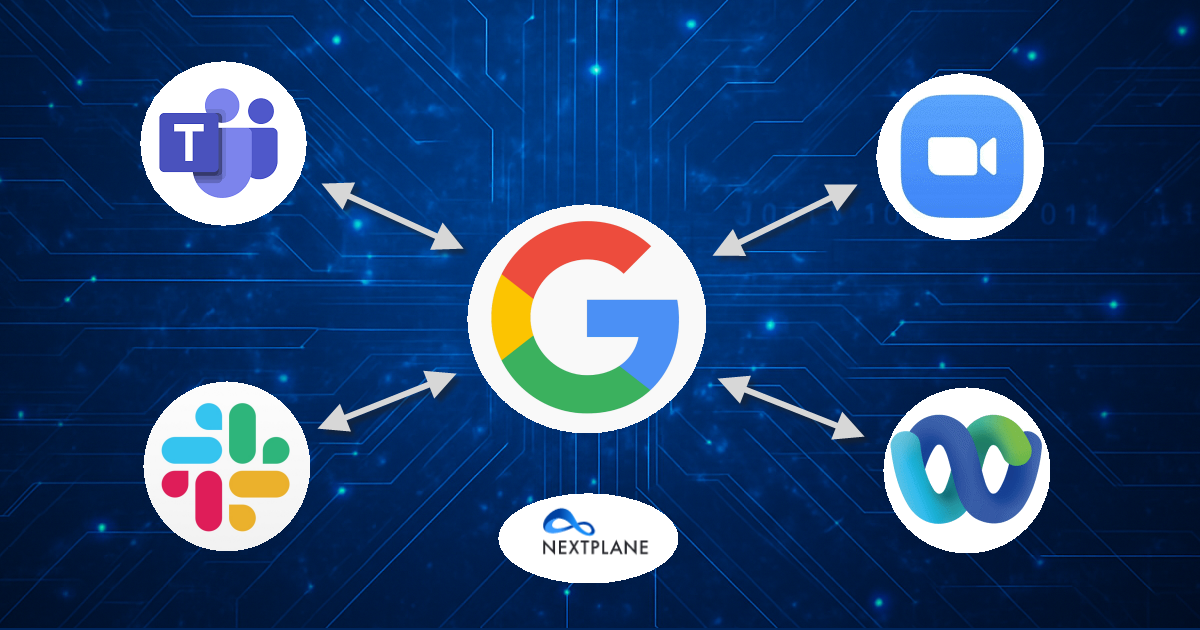
For years, the enterprise collaboration market has remained fragmented, and organizations have adopted different chat platforms for various reasons. Some prefer Slack for its integrations, while others are locked into Microsoft Teams for its deep ties to the Office 365 ecosystem. Others have opted for Google (News - Alert) Workspace, while still others use completely different tools (Zoom, Slack, etc.). In many cases, teams or individuals within organizations use different tools and platforms – and many communicate with external partners and clients who aren’t on the same platforms. All of this has led to an increase in collaboration silos, where critical conversations are trapped within a single application, forcing employees to constantly switch between platforms, manage multiple accounts, and risk losing information.
I feel confident saying most of you have experienced this. It’s frustrating, at the very least, not only because of the constant need for switching between platforms, but also because it often creates issues with peripherals. This constant application switching and other issues are more than just a source of frustration – they’re a productivity drain.
But, it’s even more than that; it can create significant business problems. Mergers and acquisitions become more complex when two companies use different communication tools. Global supply chains struggle to maintain fluid communication with vendors on disparate platforms. When these challenges are coupled with today’s hybrid work environments, the demand for a single, unified communication experience – regardless of the underlying technology – is very real and has become more urgent than ever.
In this age, where we do pretty much everything digitally, most users have probably wondered at one time or another, “Why can’t they just work nicely together?”
Here’s the thing – most vendors don’t care. Their desire is for everyone to unify on their platforms.
There is one platform vendor that has always been more open to interoperability than others: Google, which is trying to solve this challenge with its recently launched chat interoperability. This feature, within Google Workspace, is more than just a product update; it's a fundamental shift in how enterprise communication platforms are designed.
While the news is framed as a Google innovation, the technical powerhouse behind it is NextPlane's OpenHub, a sophisticated interoperability platform that is now enabling seamless, real-time communication between users on Microsoft (News - Alert) Teams, Google Chat, Slack, Zoom, and Webex.
For now, the interop exits for the chat interactions within platforms, but NextPlane Founder and CEO Farzin Shahidi says bi-directional voice and video communications will be enabled between Teams and GWS sometime next month.
“We are firm believers in total interoperability between different collaboration platforms, and we are excited to announce that we are expanding our capabilities to include voice and video interoperability,” he told me.
He wouldn’t commit to the same A/V interop between other platforms, noting the focus is currently on GWS and Teams – which makes sense, given they held the two largest market shares in collaboration software revenue last year. But, it’s also probably not a stretch to think other platforms are on the future roadmap.
NextPlane is enabling Google to do something users have longed for, but the industry has failed to deliver. Its OpenHub platform is the invisible engine that makes seamless experiences possible through a "proxy guest architecture," which creates a virtual identity for users on each platform, making external collaborators appear native to the tool. This is a crucial element that distinguishes it from other solutions.
Key elements of NextPlane's OpenHub include:
- Real-time Protocol Translation: OpenHub translates messages, file shares, rich text formatting, and emojis in real time between different platforms, ensuring the fidelity and integrity of every conversation.
- Security and Compliance by Design: The platform's stateless architecture means it never stores sensitive data, addressing a major concern for highly regulated industries. It also supports data residency requirements and offers options for private, dedicated instances.
- Administrative Simplicity: While OpenHub is a complex technical solution, its integration with Google Workspace means administrators can manage interoperability directly from their familiar admin console, with no new dashboards or complex configurations.
Certainly, the interoperability serves to simplify the user experience, removing friction that has traditionally created headaches for users and IT teams. A Google Chat user, for example, can now message a colleague in Teams as though they are using the same application. There's no need to switch windows, log into a different service, or use a cumbersome web portal. This saves time, reduces app fatigue, and keeps conversations organized within a single, familiar environment.
It also benefits IT and security teams. Because OpenHub's architecture is built with enterprise needs in mind, it doesn't store messages or files, acting, instead, as a secure relay. File sharing leverages native permissions from the originating platform (e.g., Google Drive or SharePoint), ensuring data security and compliance. For IT administrators, this means they can enable cross-platform communication without losing control, visibility, or audit trails.
Enterprises, especially those with complex technology stacks, large partner networks, or ongoing M&A activity, can maintain a diversified collaboration environment without the traditional pain points. Instead of going through a costly and disruptive rip and replace process to standardize on a single platform, they can follow a strategy of coexistence, potentially saving millions in licensing and migration costs – not to mention the disruption that comes with users having to switch to a new platform.
Perhaps most importantly, though, it validates interoperability as a core need. By partnering with NextPlane, Google is officially endorsing the concept of interoperability as a must-have feature, not a third-party add-on. In doing so, Google elevates cross-platform communication from a niche solution to a mainstream, enterprise-grade capability.
By choosing to embed NextPlane OpenHub, Google is leveraging an enterprise-grade solution that has already solved the intricate technical challenges of chat interoperability. It’s an important evolution because it signals recognition by one of the world's largest technology companies that a closed ecosystem approach is not a viable long-term strategy. Instead of competing for platform dominance, the new model is one of cooperation and seamless integration, allowing businesses to use the best tools for their needs without sacrificing connectivity.
Edited by
Erik Linask