The shadow of quantum technologies looms large over the cybersecurity landscape, presenting an unprecedented challenge to the very foundation of digital safety. Today's public key encryption methods, which secure everything from financial transactions to personal communications, are based on mathematical problems that even the most powerful conventional supercomputers cannot solve… yet.
As always, timing is everything, and the immense computational power of future quantum computers will render current encryption ineffective to the point where it can be broken within minutes.
Even though we’ve not yet reached that point, it has create a current vulnerability, known as “store now, decrypt later” attacks. In this scenario, malicious actors collect sensitive encrypted data today and store it, patiently waiting for the quantum era, when they will use quantum computers to decrypt it. Industries dealing with highly trust-sensitive information, including financial services, the public sector, critical infrastructure, and healthcare, are particularly susceptible to such attacks, facing severe risks to data privacy, intellectual property, and national security.
While a precise timeline for the arrival of cryptographically relevant quantum computers remains a subject of discussion, the consensus among experts is that it is not a distant theoretical concept, but an imminent and real threat. In addition, the very existence of “store now, decrypt later” attacks underscores that the threat is already here. Organizations cannot afford to wait for a definitive date and should invest in proactive measures, like quantum-safe networks, today.
Hiroshi Tsukino, Corporate VP of Toshiba (News - Alert) Corporation, emphasized the urgency: “The quantum age isn’t just some fringe concept anymore, and large organisations are on the front line when it comes to the dangers posed by powerful quantum computers.”
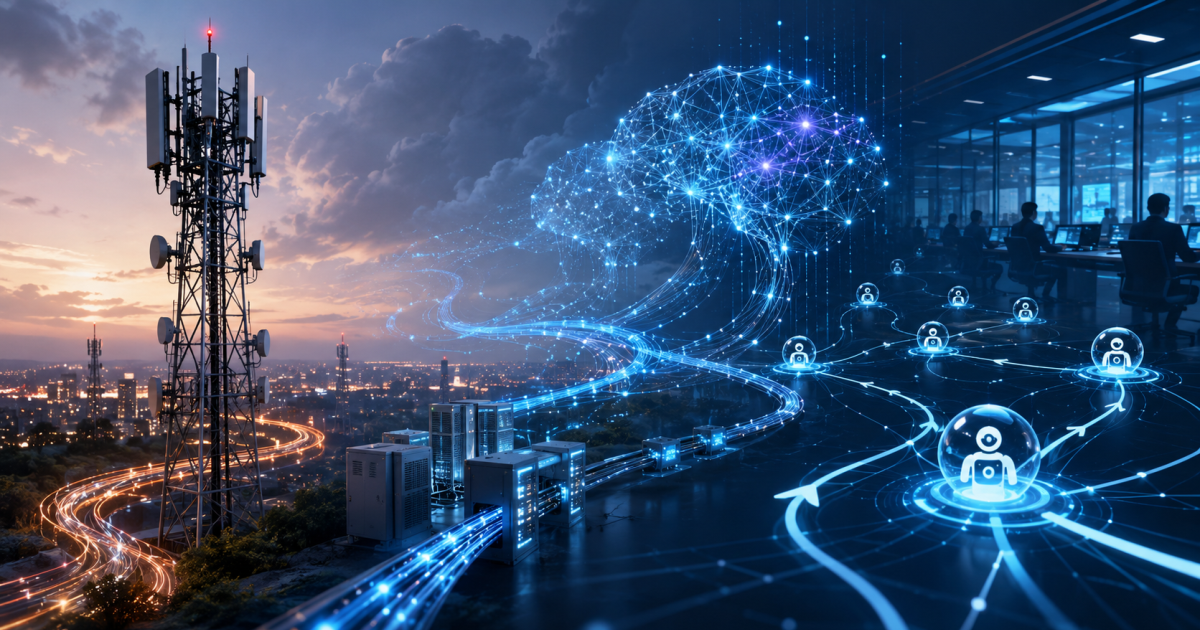
In response to both existing and future quantum threats, Orange (News - Alert) Business and Toshiba Europe have partnered to launch the first quantum-safe networking service in France. The Orange Quantum Defender service operates over the existing Orange commercial fiber network in Paris. It leverages Toshiba’s Quantum (News - Alert) Safe Networking technology, combining Quantum Key Distribution (QKD) with Post Quantum Cryptography (PQC) to defend against the looming threat of quantum cyber attacks.
QKD, a hardware-based solution, generates and distributes encryption keys that are fundamentally secure based on the laws of physics, making them impossible to intercept without detection. PQC refers to cryptographic algorithms designed to be secure against attacks by quantum computers while still running on classical computers. This approach provides a multi-layered security framework, offering robust protection for sensitive data and ensuring future data security.
Joint tests between Orange and Toshiba have already validated the practicality and scalability of this technology, demonstrating that Toshiba’s QKD could operate over long distances at high secret key rates and, crucially, co-exist seamlessly with conventional data signals on existing fiber networks. In other words, the trials show that quantum-safe solutions can be deployed today on current infrastructure, significantly lowering barriers to adoption and demonstrating a clear path for how quantum-safe technologies will be integrated into and transform existing networks.
According to Orange and Toshiba, a leading French financial services firm has already connected multiple sites to the Orange Quantum Defender network, securing its critical financial data with high-speed, resilient, quantum-safe infrastructure.
Edited by
Erik Linask