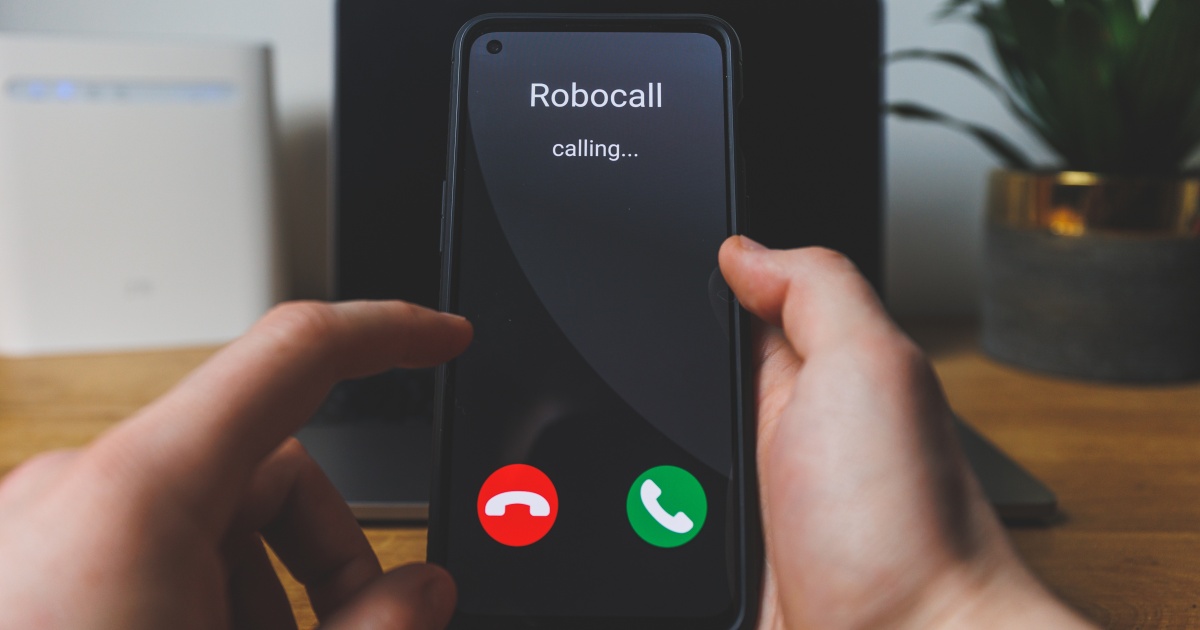
A call recipient receives an incoming call from an unknown number. After looking at the caller ID carefully, the recipient notices it displays the name of a well-known bank, accompanied by a "verified" label. This verification label is made possible through the STIR/SHAKEN authentication process.
The STIR/SHAKEN framework is a tool used to against caller ID spoofing. With STIR/SHAKEN, calls are digitally signed with a certificate to ensure that the caller ID information is legitimate and has not been tampered with.
Assured by the verified status displayed on their phone, the call recipient decides to answer the call, confident that the caller ID information is authenticated. On the other end, a representative from the bank introduces themselves and provides a legitimate reason for the call, such as verifying a recent transaction or offering a new financial service. By leveraging the STIR/SHAKEN protocol, the call recipient gains a heightened level of trust and assurance in engaging with the caller.
If that call was not legitimate, it may have been labeled as "unverified" or "potentially fraudulent" on the recipient's phone display to identify a could-be robocall. STIR/SHAKEN helps individuals make informed decisions about answering or handling such calls, taking into account the level of trust associated with the caller ID information.
And it is working.
The robocall mitigation framework in the U.S has reduced the year-on-year growth of fraudulent losses to illegal robocalling in the region by 85% between 2022 and 2023, according to Juniper Research. And by 2025, fraudulent losses arising from robocalling are anticipated to decline for the first time in North America.
A result of this trend? Consumers start to trust caller ID again. This means that consumers are more inclined to answer important calls from their doctor, school, insurance provider and other legitimate businesses rather than letting them drop into voicemail.
Consumers, businesses and the communication service providers that serve them can take a quick sigh of relief, but the fight against illegal robocalls is not over. That is why iconectiv's George Cray is bringing his STIR/SHAKEN expertise to the SIP Forum (News - Alert) as a newly elected member of its Board of Directors.
The SIP Forum aims to drive innovation, interoperability and the widespread adoption of SIP. When it comes to STIR/SHAKEN, the forum works with other organizations to ensure alignment and broad industry adoption of STIR/SHAKEN.
“For years, one of the SIP Forum’s top priorities has been helping the telecom ecosystem mitigate the scourge of illegal robocalls and caller ID spoofing,” said SIP Forum President and Managing Director Marc Robins. “A prime example is our collaboration with ATIS (News - Alert) to develop STIR/SHAKEN, which the FCC subsequently mandated in 2020. That work is paying off, and iconectiv has been a major contributor in that effort.”
As senior vice president of product at iconectiv (News - Alert), Cray leads a team responsible for several platforms and industry registries designed to help CSPs restore consumer trust in voice and messaging. One example is the U.S. Calling Number Verification Service, where iconectiv is the policy administrator. Cray and his team also contribute to industry advancements through the FCC (News - Alert) NANC, CTIA CyberSecurity working group and numerous ATIS committees and GSMA working groups.
And Cray knows the importance of STIR/SHAKEN when it comes to protecting consumers.
“STIR/SHAKEN highlights the value of an authoritative verification framework that all CSPs can leverage to protect their consumer and enterprise customers against spoofing and other fraud,” Cray said. “Now it’s time to extend that trust model to the world with a new global framework that CSPs everywhere can use to vet their trading partners and the traffic they generate. The SIP Forum is uniquely positioned to take the lead in turning this vision into reality.”
As a member of the Board of Directors, Cray will help provide guidance and overall governance of all SIP Forum operations.
Edited by
Alex Passett