Despite years of federal and state efforts to curb robocalls and phone scams, the problem persists, frustrating consumers and straining trust in telecommunications. You are all well aware of the issues, I’m sure; I would guess your phone is constantly ringing with calls from numbers you don’t know. Like me, I also imagine many of you have also simply stopped answering calls unless they are from people in your phone’s contacts. It’s frustrating, to say the least, and I’m sure we all miss conversations we may want to have because of it.
But, there simply isn’t a better option currently. Existing rules, such as the FCC’s (News - Alert) mandate for carriers to implement the STIR/SHAKEN caller ID authentication framework, have improved call verification to some degree, but they haven’t gone far enough, at least as far as compliance and enforcement are concerned.
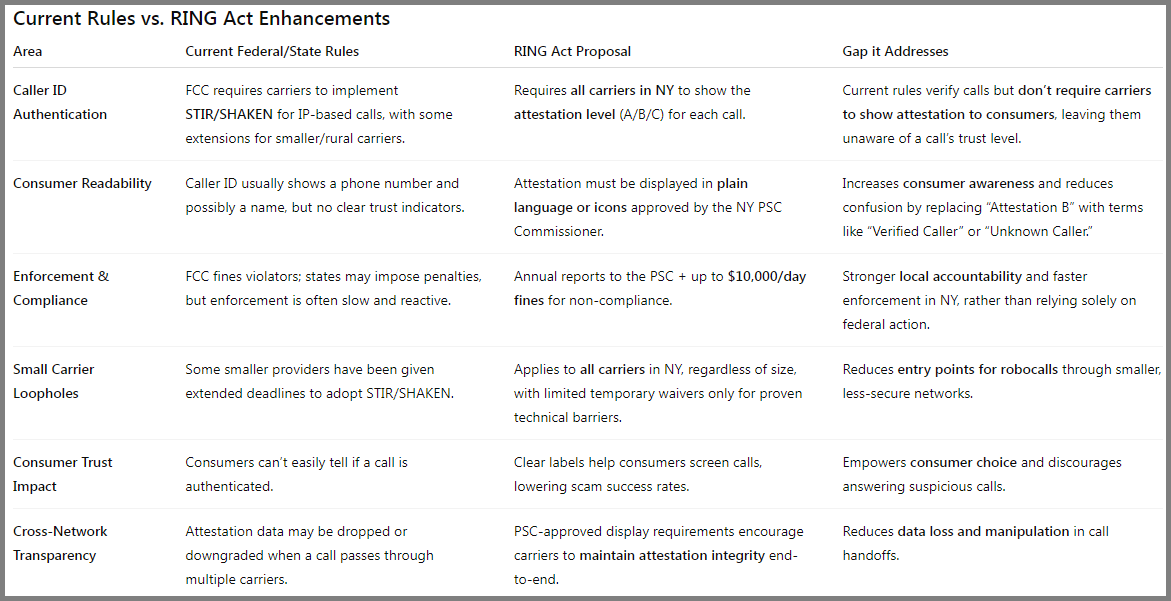
For one thing, there’s the question of what attestation really means to the people who matter – consumers. While calls may be verified behind the scenes, consumers rarely see this information. Caller IDs typically display only a phone number and sometimes a name, leaving people unable to judge a call’s trustworthiness before answering.
There’s also an adoption/compliance issue. Many smaller and rural carriers have been granted extended deadlines to implement STIR/SHAKEN, creating loopholes that allow scam traffic to enter networks.
In addition, many robocalls originate internationally, where U.S. rules don’t apply. Calls often pass through multiple carriers, losing or downgrading attestation data along the way.
Finally, enforcement has also been largely reactive, penalizing violators after the fact rather than preventing scams upfront. It allows fraudsters to continuously evolve their tactics to stay ahead of regulations.
So, what’s the answer to help reduce scams and fraud and to revive trust in voice calls?
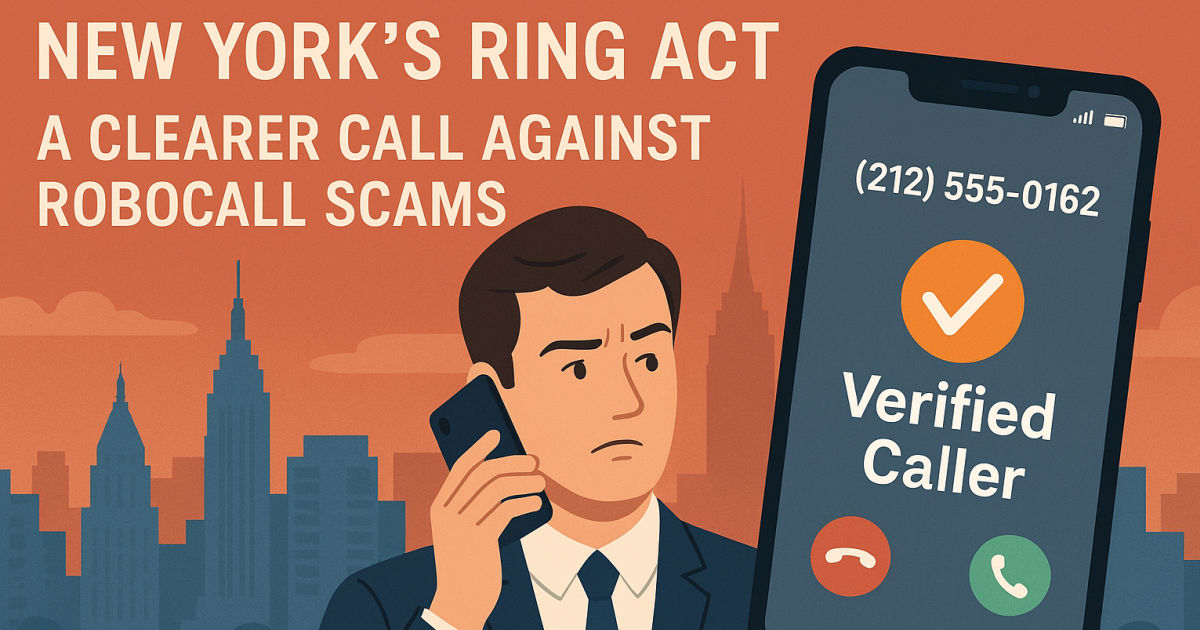
New York State is taking a crack at it with its newly proposed Robocall Identification and Notification for Guarding consumers Act (RING Act, New Your State Senate Bill 2025 S8470, which seeks to address these shortcomings by making attestation data visible and understandable to consumers. The bill would require all carriers operating in the state, regardless of size, to display a call’s STIR/SHAKEN attestation level in plain, consumer-friendly language or symbols approved by the Public Service Commission’s Commissioner.
For instance, instead of confusing technical labels, like “Attestation B,” consumers might see “Verified Caller” or “Unknown Caller.” This simple change would allow people to screen calls more effectively, potentially reducing scam success rates and forcing carriers to improve the share of calls they can deliver with the highest attestation level.
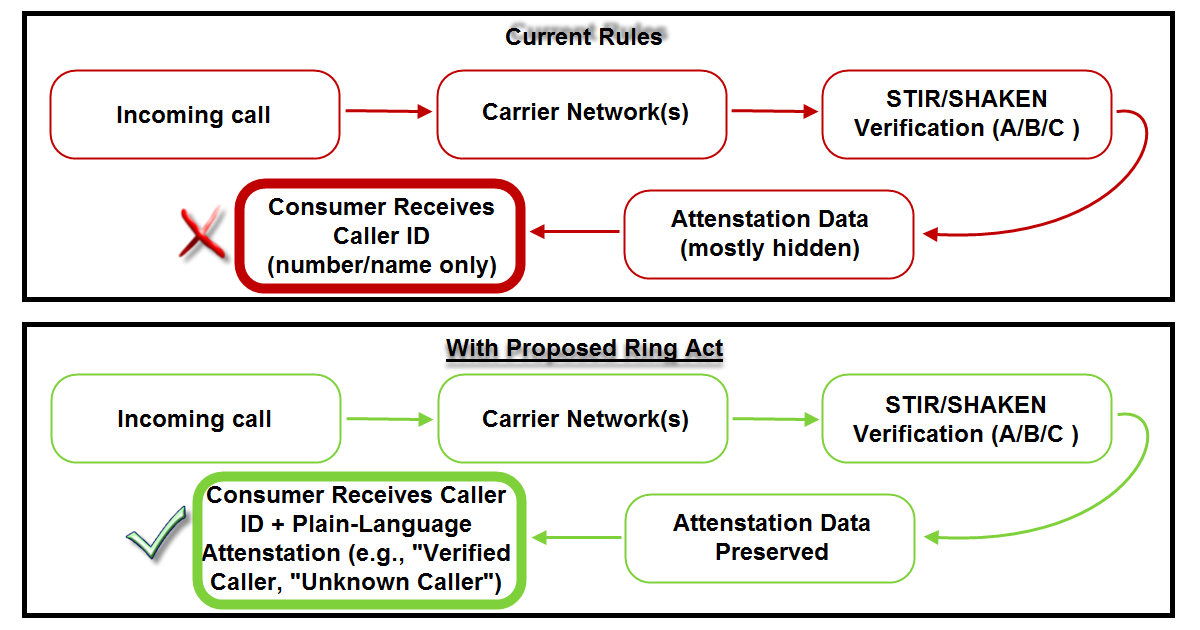
For carriers, the impact won’t be small or cheap; they are going have to spend to become compliant. Providers will need to ensure that attestation data is preserved and passed along across all network hops, integrate new display capabilities into caller ID systems, and coordinate with the PSC to meet approved design standards. There will also be compliance reporting requirements, with annual submissions to the PSC detailing implementation progress and technical challenges. The RING Act sets a firm accountability framework, imposing penalties of up to $10,000 per day for non-compliance.
While the legislation allows temporary waivers of up to 12 months for documented technical issues, smaller carriers without robust authentication systems may face resource and cost pressures in meeting the mandate. However, compliance will become a competitive differentiator, as carriers delivering consistently high verification rates can market themselves as safer, more trustworthy providers.
As is often the case with state legislation, if implemented successfully, the RING Act could set a precedent for other states or even federal adoption, shifting the industry toward proactive transparency rather than reactive enforcement. By giving consumers direct, plain-language trust indicators at the moment of contact, and by holding carriers to a uniform, enforceable standard, New York’s proposal tackles both the technical and behavioral weaknesses that have kept existing legislation from fully solving the robocall problem.
Obviously, NY Senate Bill S8470 is only in its infancy, but, if passed, the result could be a telecom environment where scam calls are easier to spot, harder to complete, and less profitable, ultimately restoring much-needed confidence in the phone system to everyone’s benefit.
Is it likely to pass? There’s certainly going to be pushback from carriers, but there will also likely be strong support from other constituencies, including consumers and consumer protection advocates, along with businesses who stand to benefit from higher faith in phone calls. The fact is that these sorts of regulations haven’t had enough success to date put this bill in montion – it should be enough to move it forward, too.
The ongoing robocall problem, lack of faith in the phone network, the impact on both businesses and customers, and technology available to combat these challenges will all be part of the conversation at ITEXPO 2026. Since 1999, ITEXPO (News - Alert) has provided an opportunity for the business technology and telecom community to converge, interact, and learn about the latest trends, challenges, and opportunities in the business technology space. Collocated with a range of other conferences, like MSP Expo, GenAI Expo, AI Agent Event, Enterprise Communications Summit, Enterprise Cybersecurity Expo, Future of CX Expo, AIoT World Expo, and others, the ITEXPO #TECHSUPERSHOW is a one-stop shop for the information and networking every business needs to make the most of the amazing technological innovation happening today.
Edited by
Erik Linask