


Call Center QA Featured Article
The Customer's Verdict: Using Post-Interaction Surveys to Drive Real Contact Center Improvement
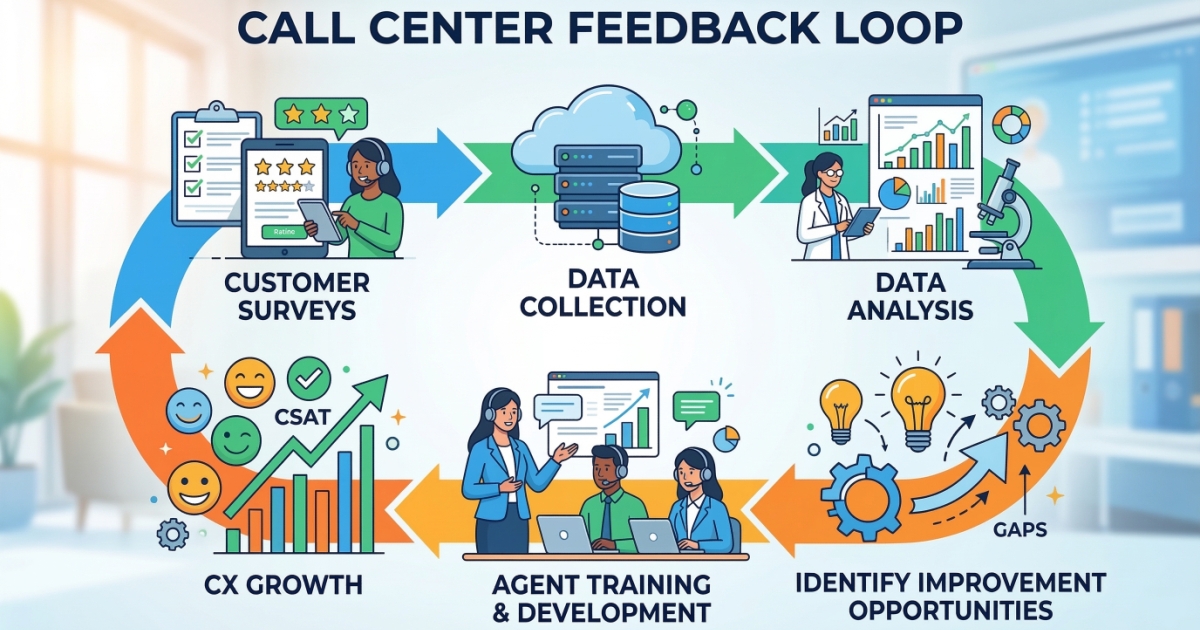
The Power of Post-Interaction Surveys: Getting Actionable Feedback from Your Customers
Post-interaction surveys are the direct line to your customers’ perspective, providing a “truth check” on the service your organization delivers. While internal metrics tell you what happened during a call, a well-designed survey tells you how it felt for the person on the other end. In a modern contact center, these surveys have moved beyond simple vanity metrics and are sophisticated tools for diagnosing friction, identifying high-performers, and uncovering systemic issues that internal evaluations might miss. To turn these surveys into an engine that drives customer experience improvement, organizations must focus on intentional design and data application.
Designing for Clarity (News - Alert) and Completion
The effectiveness of a survey is largely determined before the first question is even asked. To maximize response rates and data quality, surveys must be concise, timely, and easy to navigate. Most successful programs rely on a combination of standard metrics, like Customer Satisfaction (CSAT) to measure the immediate sentiment of the interaction, Net Promoter Score (NPS) to gauge long-term loyalty, and Customer Effort Score (CES (News - Alert)) to identify how easy it was for the customer to get their issue resolved. Timing is equally critical. Sending a survey immediately after the interaction, across whichever channel the customer used, ensures the experience is fresh in the customer's mind, leading to more accurate and detailed feedback.
What many organizations overlook, however, is the quality of the open-ended question. A single, well-crafted follow-up prompt, perhaps something as simple as, "Is there anything else you'd like us to know about your experience today?" can yield some of the richest qualitative data in the entire feedback cycle. These responses are where customers describe their experiences in their own words, often surfacing specific agent behaviors, process frustrations, or emotional moments that a numerical score can never fully capture. Contact centers that treat the open-ended field as an optional afterthought are leaving some of their most valuable data uncollected.
Surveys probably deserve more strategic attention than they typically get in most organizations. Different customer segments respond at different rates, depending on the channel. Some populations are far more likely to complete an SMS survey than an email one, while others prefer the immediacy of a post-call IVR prompt. Organizations that default to a single survey channel without testing alternatives may be systematically undersampling certain customer segments, which skews the data and creates blind spots in the feedback picture.
Transforming Raw Data into Actionable Insights
Collecting data is only half the battle; the true value lies in the analysis. Leaders should look for patterns rather than isolated incidents. By segmenting survey results by call type, product line, or time of day, organizations can pinpoint specific areas where the experience is breaking down. For example, if "technical support" calls consistently receive high CSAT scores, but high Effort scores, it stands to reason that, while agents are helpful, the process itself is too cumbersome. Furthermore, correlating this qualitative data with internal call center QA scores provides a 360-degree view of performance. When a survey shows negative sentiment despite a high call center QA score, it indicates a disconnect between what the company considers "quality" and what the customer actually values.
When these disconnects surface, they are some of the most important signals a call center can receive. Quite simply, they suggest that the QA scorecard may be measuring the wrong things, or weighting criteria in ways that don't reflect actual customer priorities. A customer who rates an interaction poorly, despite the agent following every step of the evaluation rubric, is telling leadership the rubric needs to evolve. While they are useful for individual feedback and training exercised, post-interaction survey data are also a tool for auditing and improving the QA program itself.
Closing the Loop and Driving Change
Actionable feedback is wasted if it doesn't lead to tangible change. Closing the loop involves two paths. On a micro level, "hot alerts" should be triggered for any significantly negative survey, allowing a supervisor to follow up with the customer directly to resolve the issue and secure the relationship. On a macro level, the aggregated data should inform the broader training and operational strategy. If surveys frequently mention long hold times or repetitive transfers, leadership must address staffing levels or routing logic. When agents see that the feedback they receive – both from customers and through the call center QA process – directly leads to improved tools and clearer policies, they are more likely to stay engaged and committed to a customer-centric vision.
There is also a cultural dimension to closing the loop that is easy to overlook. When survey findings are shared transparently with agents, instead of merely being used behind the scenes to inform management decisions, a very different message is delivered about how the organization values customer voice. Agents who regularly see real customer comments, both positive and critical, develop a more grounded sense of what excellent service actually looks like. Positive comments are particularly worth sharing, because an agent who reads a customer's genuine appreciation for how they were treated during a difficult interaction receives a form of reinforcement that no scorecard metric can replicate.
Call centers should resist the temptation to measure survey programs solely by response rates or average scores. The more meaningful measure is whether the data is actually changing anything –whether insights from surveys are showing up in coaching conversations, training, process redesigns, and QA scorecard revisions. A survey program with a modest response rate that consistently drives meaningful operational change is worth far more than a high-volume program that doesn’t create any change because the data sits in a dashboard or database that no one looks at. Here’s the thing: The goal with surveys isn’t data collection; it’s improvement.
Edited by Erik Linask